

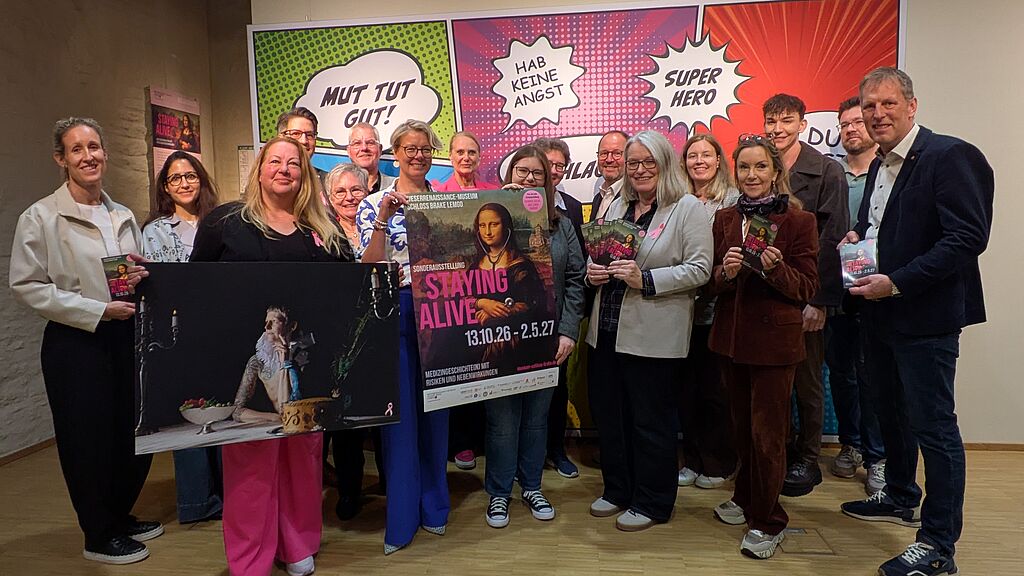
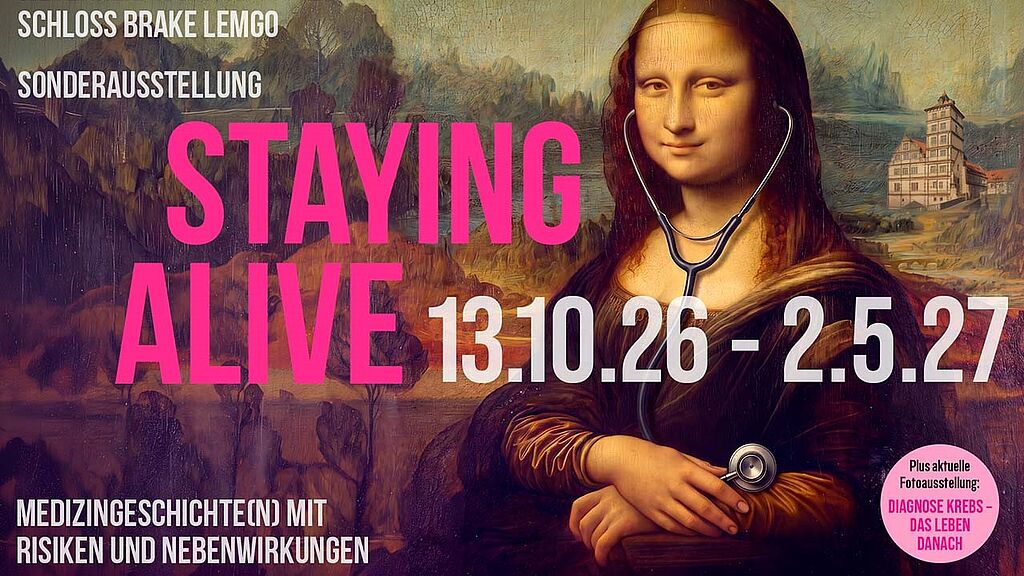
What exactly makes us ill? Who and what heals us, and above all, how? And why do certain medical issues preoccupy us just as much today as they did centuries ago? The Weser Renaissance Museum at Brake Castle explores these questions in its new special exhibition, “Staying alive. Medical history(ies) with risks and side effects”. inIT is also taking part in this extraordinary special exhibition covering 2,000 years of medical history.
Health and culture form a unity
With “Staying alive. Medical history(ies) with risks and side effects”, the Weser Renaissance Museum at Brake Castle brings together art, cultural history and medicine in an unusual way. The interactive exhibition invites visitors to marvel, try things out and discuss, and highlights how health has been inextricably linked to our culture for centuries. At the same time, it aims to raise awareness of the importance of prevention, research and physical and mental health, and to demonstrate the positive contribution that cultural participation can make to well-being.
Medicine and health
One of inIT’s key research areas is medical and health technology, which is reflected in the new “Health Informatics” degree programme starting in the winter semester 2026/27. For many years, inIT has been conducting research on health-related topics for the people of the region in collaboration with strong partners in the health sector, such as the v. Bodelschwinghschen Bethel Foundations, the CareTech OWL research network and Lippe Hospital. The inIT was already actively involved as a partner of the Weserrenaissance Museum in the previous exhibition, “A KInd of Art”, which explored topics relating to Artificial Intelligence.
Designing medical spaces
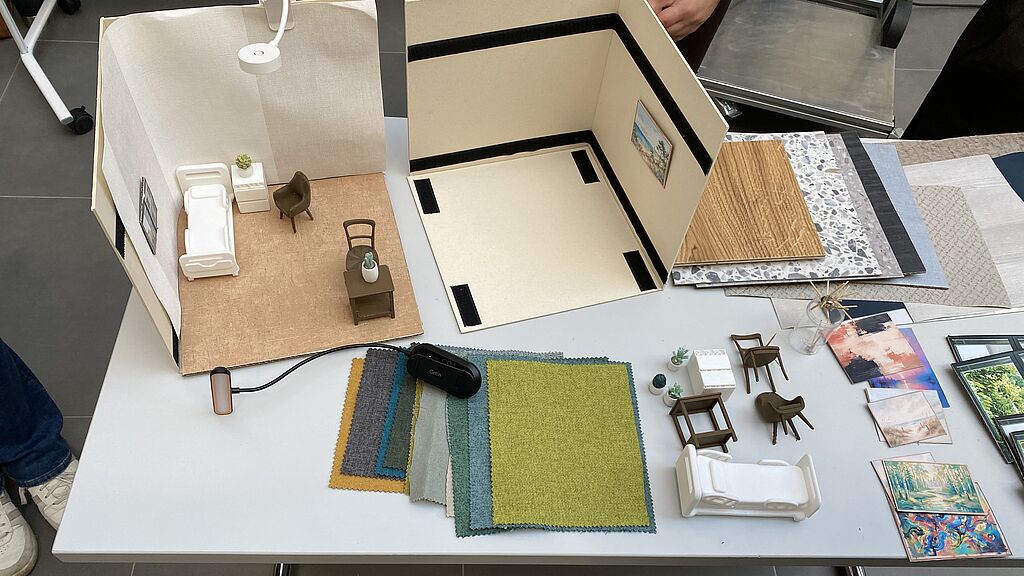
As the aim is to enable visitors to experience the evolution of medicine over the centuries, inIT has provided not only a state-of-the-art ultrasound machine but also a research exhibit on medical spaces.
As part of the 2025 Transfer Year, three Bachelor’s students from the departments of Business Psychology and Interior Design, under the supervision of the Discrete Systems research group led by Senior Professor Dr. Volker Lohweg, investigated how medical spaces can be designed to promote the well-being and, consequently, the recovery of patients. The students conducted in-depth research into neural perception in medical spaces and developed creative solutions for how an optimal indoor environment can contribute to patients’ recovery. In the interactive special exhibition, visitors can design their own hospital room using a modular approach.
A varied programme of events
The special exhibition “Staying alive” is complemented by a varied programme of events, including guided tours, workshops, cultural events and lectures. Senior Professor Dr. Volker Lohweg will give a lecture on digitalisation and Artificial Intelligence in health and medicine.
The special exhibition “Staying alive. Medical history(ies) with risks and side effects” runs until 2 May 2027. We warmly invite you to discover this fascinating exhibition!