

Roadworks can fundamentally change the driving environment: lanes are redirected, road markings change, and traffic is guided differently than under normal conditions. For automated vehicles, this raises a crucial question: Can the system reliably detect when it encounters conditions outside the domain it was designed to operate in?
This is the question being investigated by Ramakrishnan Subramanian and Kiran Bhaskar Sajikumar, research associates in the Intelligent Systems research group led by Prof. Dr. Ulrich Büker. Together, they are exploring how an automated vehicle can detect when it leaves its so-called Operational Design Domain (ODD) in roadworks scenarios and how the associated risk can be assessed.
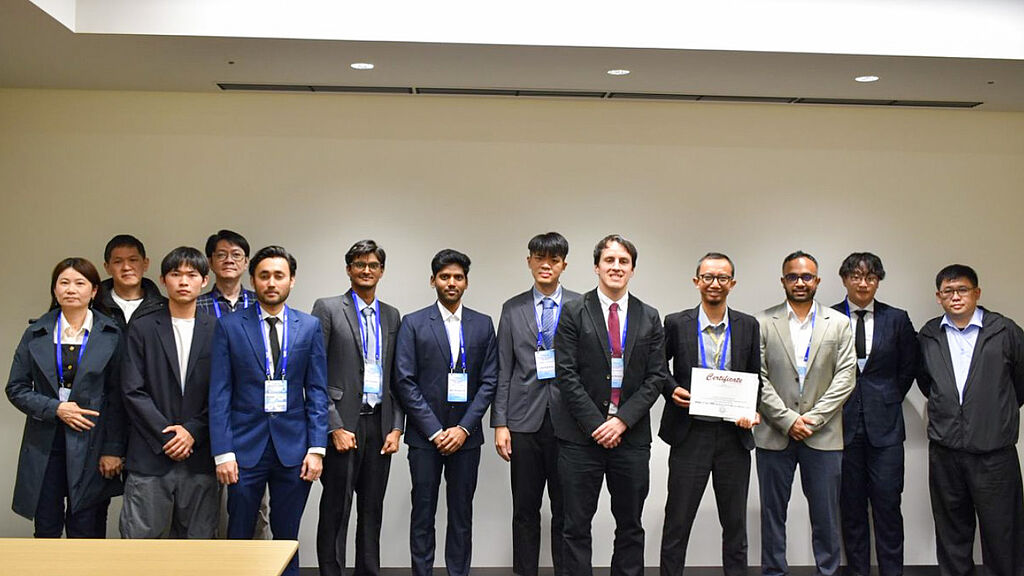
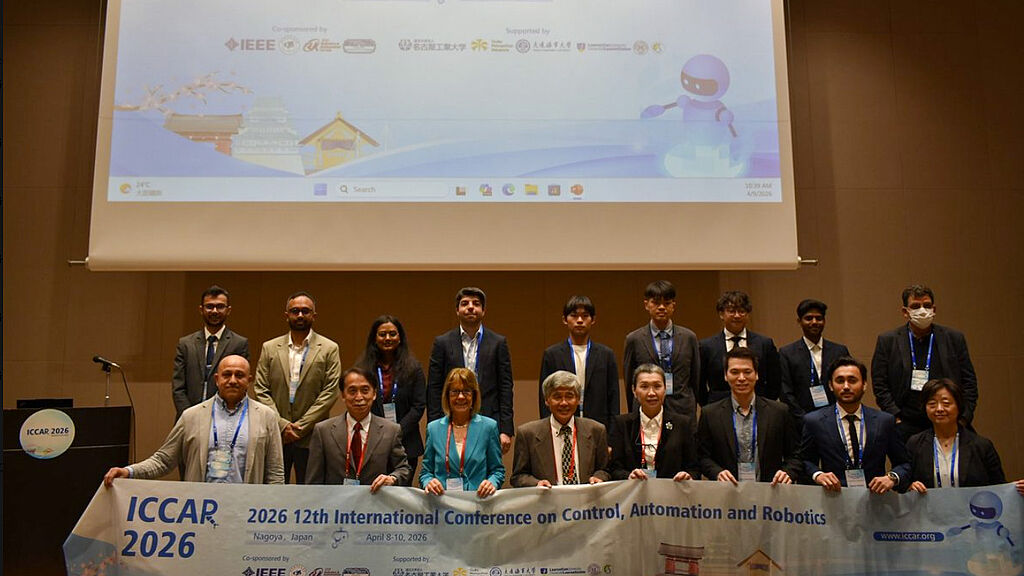
Ramakrishnan Subramanian presented their findings at the 12th International Conference on Control, Automation, and Robotics (ICCAR 2026) in Nagoya, Japan. The IEEE conference brought together international researchers working in control engineering, automation, robotics, and autonomous systems.
When operating conditions no longer match
The Operational Design Domain defines the conditions under which an automated driving system is intended to operate. These may include specific road, traffic, or environmental conditions. If those conditions change to the point where they fall outside the defined operating domain, the system needs to detect this transition reliably.
This is precisely where the paper “Operational Design Domain Exit Detection and Risk Assessment for Roadworks Scenarios in Autonomous Vehicles” by Ramakrishnan Subramanian, Kiran Bhaskar Sajikumar, and Prof. Dr. Ulrich Büker comes in. The research focuses on two closely connected tasks: detecting an ODD exit in roadworks scenarios and assessing the resulting risk.
Ramakrishnan Subramanian presented the work in an oral presentation at ICCAR. The full paper is available via IEEE Xplore: https://ieeexplore.ieee.org/document/11549642
New perspectives on autonomous systems
ICCAR also gave Ramakrishnan Subramanian the opportunity to discuss the inIT research with researchers from around the world. The strong participation from East and Southeast Asian countries in particular gave him insights into current research and approaches in robotics and autonomous systems that he encounters less frequently in the European research environment.
“It was particularly interesting for me to learn about research approaches that I encounter less often in our European research environment. At the same time, the international feedback on our own work was very valuable and gave me new ideas for the next steps in my research,” says Ramakrishnan Subramanian.
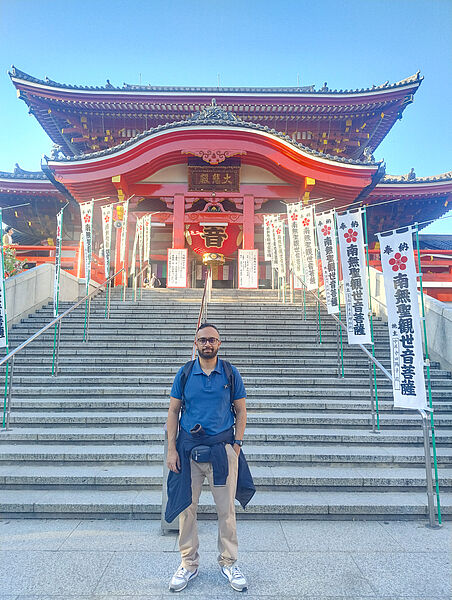
Beyond the conference itself, the trip also gave Ramakrishnan Subramanian the opportunity to experience Japan and learn more about Japanese culture. This cultural exchange made the overall stay particularly enriching for him.
Auther: Mona Marie Brinkmann