

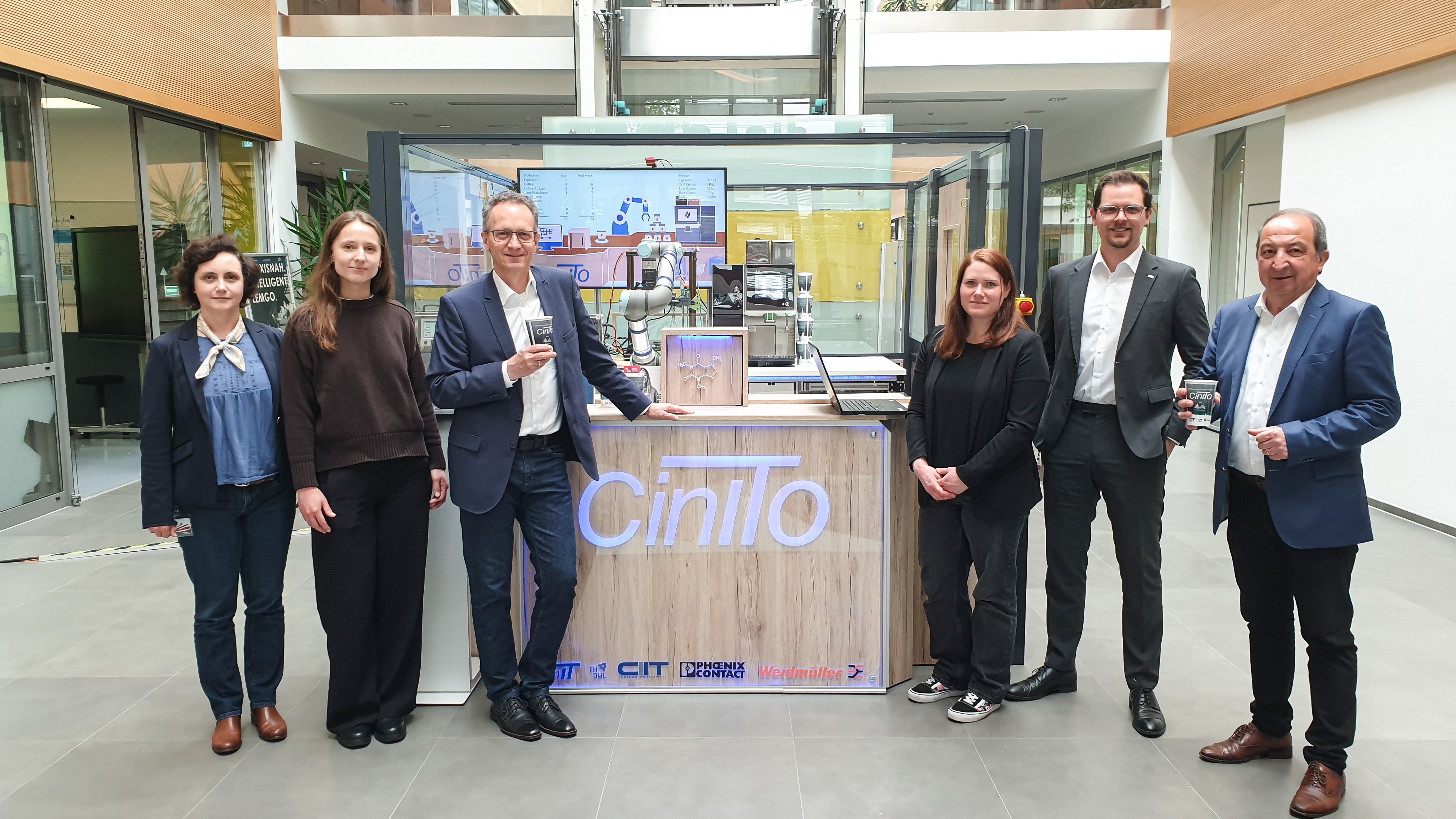
How can quality certificates be provided in a way that is trustworthy, traceable, and tamper-proof throughout the supply chain? This is the question addressed by the research project “Digital Product Passport for Reliable Information Exchange in the Supply Chain” (DiPP). At the most recent consortium meeting at inIT in Lemgo, the project team presented its latest progress and demonstrated new developments related to the Digital Product Passport.
Project partners are meeting in Lemgo
The project consortium includes the companies Endress+Hauser GmbH+Co. KG, Arvato Systems GmbH, NTT DATA Business Solutions AG, Melitta Professional Coffee Solutions GmbH, and inIT, where the project is being carried out by the Interconnected Automation Systems research group led by Prof. Dr. Henning Trsek. Together, the project partners are developing solutions for trustworthy information exchange along supply and production chains.
The Digital Product Passport is considered a key technology for a sustainable and resource-efficient circular economy. The goal is to provide relevant product information in a transparent and traceable manner and to enable new data-driven business models along the value chain.
To this end, the inIT project team regularly invites the project consortium to Lemgo to present current project results and discuss the next development steps together.
Further development of the CinITo demonstrator
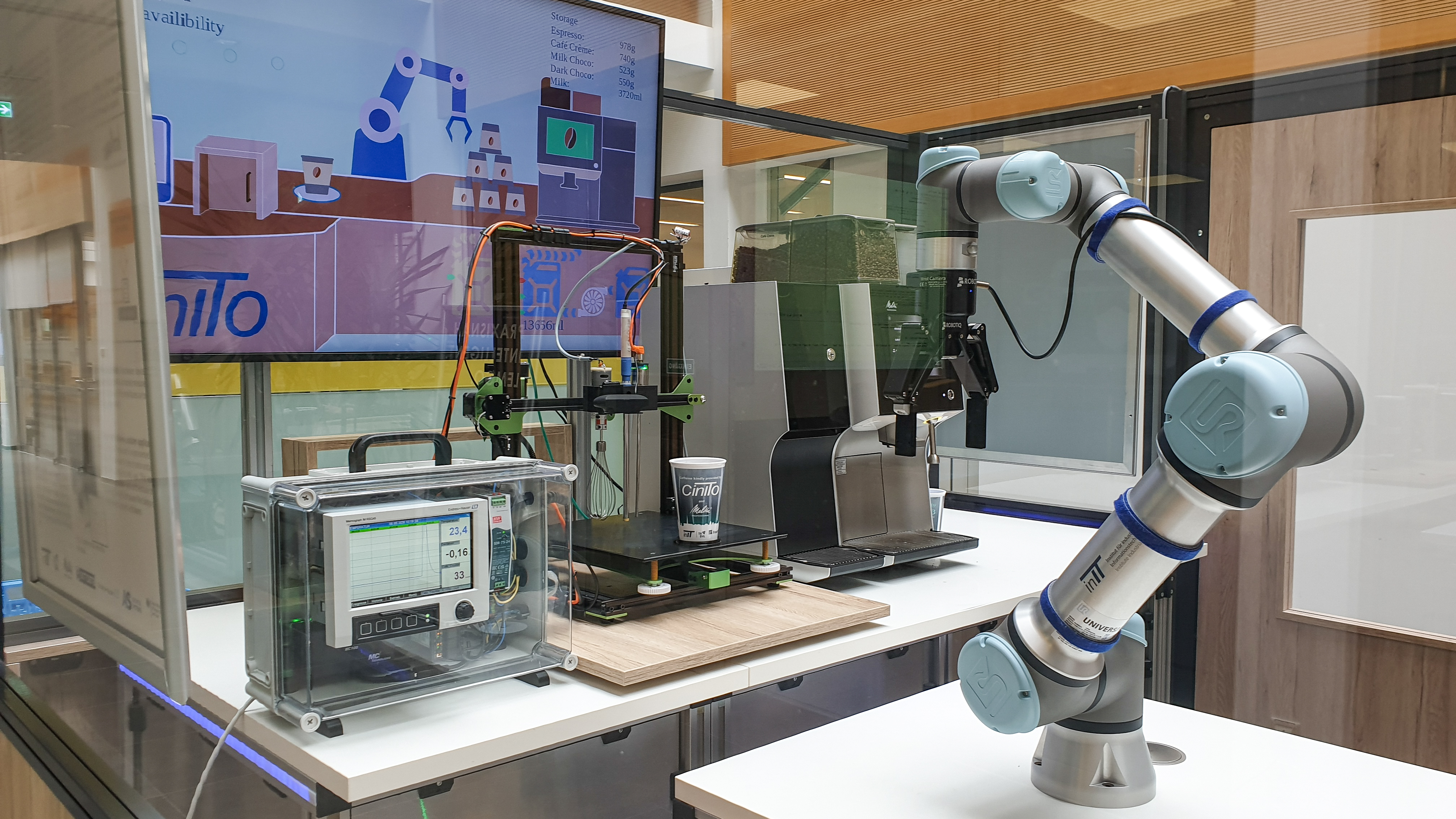
At the previous project meeting, the CinITo demonstrator was already expanded to include new hardware components, including a temperature sensor from Endress+Hauser. The goal is to realistically simulate use cases for quality management and transparency in beverage production.
Since then, the hardware has been tested and fully integrated into the production process. At the most recent consortium meeting, the project team presented the latest development status and demonstrated to the project partners the implementation of tamper-proof quality verification directly on the demonstrator.
Learn more about the last project meeting:https://www.init-owl.de/aktuelles/news/detail/projekttreffen-im-projekt-dipp-fortschritte-fuer-den-digitalen-produktpass/
Quality Certificates in the Digital Product Passport
A particular focus was placed on demonstrating an audit process in which a digital audit report, including a digital calibration certificate, is stored in such a way that the information can later be made available via the Digital Product Passport.
This makes it possible to track when an audit was conducted and what the outcome was. The information remains available throughout the supply chain and, in the future, can also be made transparently accessible to consumers.
The approach developed in the project aims to provide trustworthy and tamper-proof quality information that enhances transparency and traceability in production and supply processes.
Exchange and Joint Development
In addition to the technical demonstration, the meeting focused in particular on personal exchanges between the project partners. Together, they discussed current challenges, new ideas, and next steps for development.
“It’s always rewarding to meet with project partners on-site and present the current status of our work. Face-to-face interaction creates opportunities for discussion and opens up new perspectives and further ideas,” says Philip Sehr of the Interconnected Automation Systems research group.
About the DiPP Project
Through the DiPP project, the project partners are researching a digital product passport that enables tamper-proof and transparent data exchange throughout the entire value chain. The goal is to provide relevant product information—from raw material extraction through manufacturing and use to disposal—in a secure and traceable manner.
To strengthen transparency and sustainability in supply chains, the project combines established standards of the administrative shell with distributed ledger technologies. This is intended not only to provide trustworthy product information but also to enable new digital business models along the supply chain.
Further information on the project:https://www.init-owl.de/forschung/projekte/detail/digitaler-produktpass-fuer-zuverlaessigen-informationsaustausch-in-der-supply-chain/
Auther: Mona Marie Brinkmann