

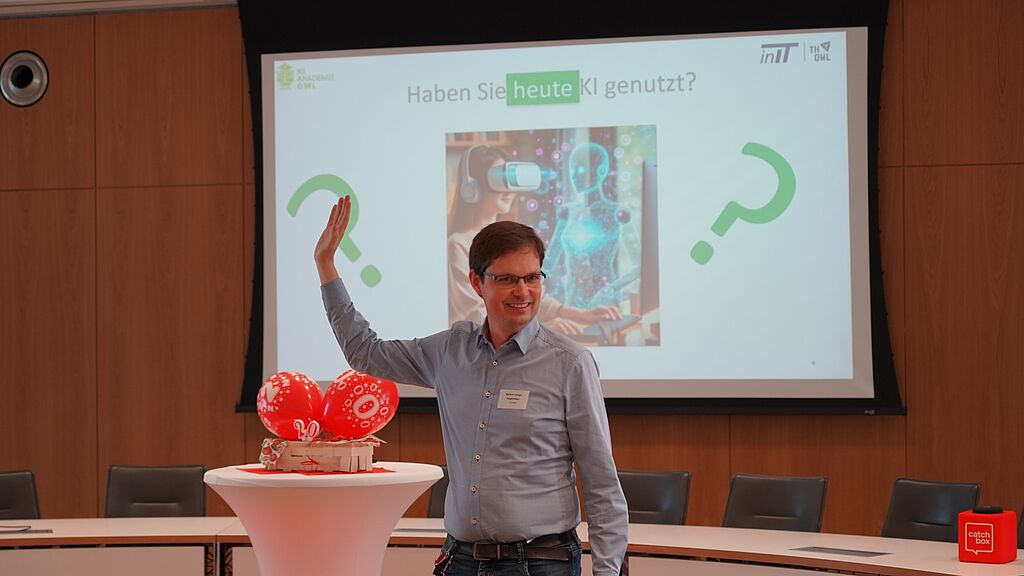
Prof. Dr. Markus Lange-Hegermann led a workshop on the use of AI in career guidance at the symposium organised by the School–Work Coordination Centre.
How is AI changing the world of work for young people? Which skills will become more important in the future? And how can schools, businesses and other partners effectively support young people on their journey from school to apprenticeships and careers? Prof. Dr. Markus Lange-Hegermann, a member of the Executive Board at Institute Industrial IT at Technische Hochschule OWL, addressed these questions at the Schu.B symposium 2026 held at the Detmold District Office.
Under the title “Understanding Perspectives – Shaping Transitions”, the School–Work Coordination Centre celebrated its 20th anniversary. The symposium highlighted how important dialogue between schools, the world of work, guidance services, politics and academia is in providing meaningful support for young people in a changing world of work.
Symposium brings together different perspectives
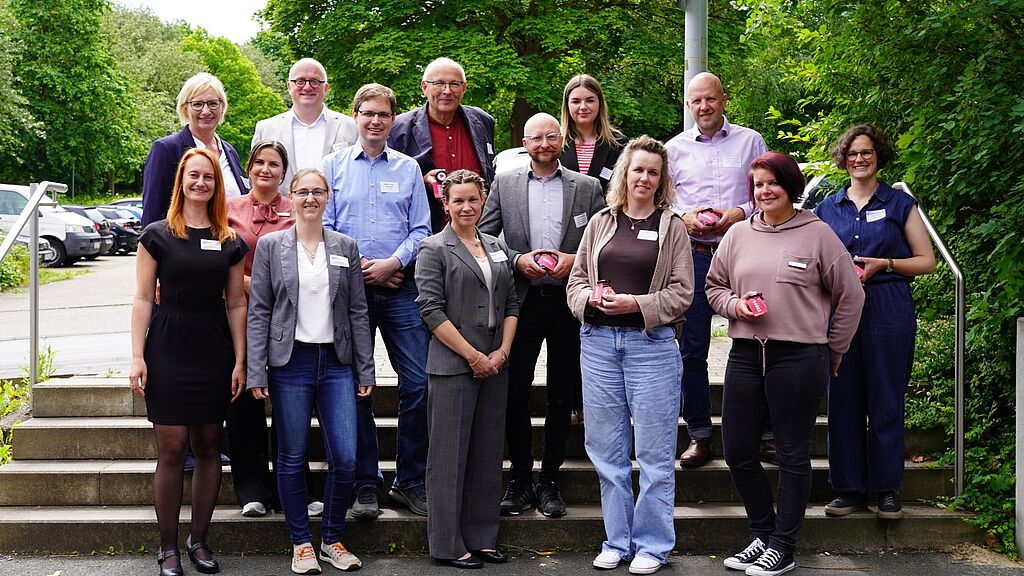
The very well-attended event was aimed at a broad audience. School pupils, vocational school pupils, apprentices, school heads, teachers and training staff, school social workers, politicians, staff from the Job Centre and from companies, as well as other network partners, came together to discuss current challenges and prospects in the transition from school to vocational training and work.
Following expert presentations, the focus shifted to practical workshops and ample opportunity for discussion. It was precisely the diversity of the participants that made the symposium particularly beneficial: different experiences, expectations and perspectives fed into a substantive dialogue on how career guidance can be shaped today.
Workshop: supporting young people in the age of AI
Prof. Dr. Markus Lange-Hegermann, who heads the “AI Academy OWL” project at inIT, led the workshop “Supporting young people in the age of AI”. The workshop addressed the question of how young people can be supported in a world of work shaped by AI and digitalisation.
The workshop recognised that young people often use AI applications as a matter of course and adapt quickly to new digital tools. At the same time, AI systems are transforming job profiles, work processes and decision-making pathways. Participants discussed how dialogue with young people about the opportunities, limitations and impacts of AI can be structured in a targeted manner. The workshop was offered in both workshop sessions and proved very popular. A total of around 70 people took part.
Research meets career guidance
The symposium highlighted the importance of transferring scientific perspectives into schools, vocational training and careers guidance. AI has long since ceased to be merely a topic for research and industry; it also influences the questions young people face when considering their career paths.
“Artificial Intelligence is changing not only individual tasks, but also the way in which young people develop their career prospects. That is why we must integrate AI literacy into career guidance at an early stage – in a way that is understandable, realistic and always with a focus on the people who will use and shape these technologies in the future,” says Prof. Dr. Markus Lange-Hegermann.