

The European Control Conference (ECC) took place from 7 to 10 July 2026 in Reykjavík, Iceland. The ECC is one of the leading international conferences in the field of control engineering and brought together around 1,000 participants from academia and industry this year. The focus was on current developments in control and systems theory – from classical questions of system dynamics to data-driven and learning-based control approaches.
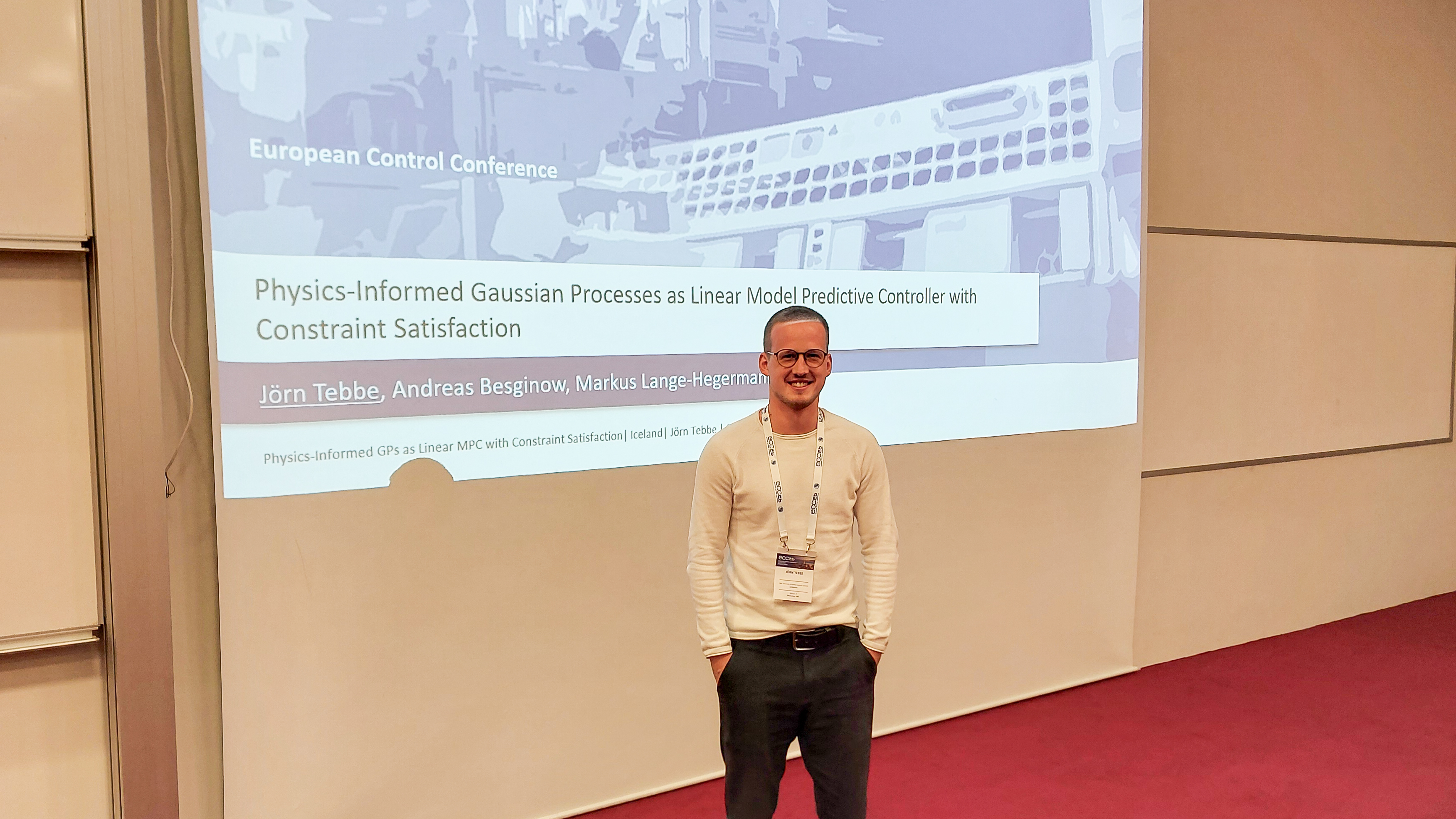
inIT was also represented with a contribution: Jörn Tebbe, research associate in the Mathematics and Data Science research group headed by Prof. Dr. Markus Lange-Hegermann, presented his current research in the field of data-based control.
Gaussian Processes for Safe Data-Based Control
In the session in which Jörn Tebbe gave his talk, the focus was on learning-based and predictive control methods. Jörn Tebbe presented the paper “Physics-Informed Gaussian Processes as Linear Model Predictive Controllers with Constraint Satisfaction”, which was prepared together with Andreas Besginow and Prof. Dr. Markus Lange-Hegermann.
The work focuses on an approach for Model Predictive Control (MPC), a method used, among other things, in safety-critical control tasks. The paper investigates how physics-informed Gaussian processes can be used to model control tasks probabilistically while ensuring that constraints are satisfied. A particular focus lies on enabling formal guarantees for the satisfaction of these constraints.
Gaussian processes are probabilistic models that can learn relationships from data while also representing uncertainty in predictions. In control engineering, they are particularly interesting when technical systems cannot be fully modelled or when measurement data plays a central role. The work of Jörn Tebbe shows how such models can contribute to making data-based control approaches not only powerful, but also reliable in practical use.
Keynotes and Exchange in an International Setting
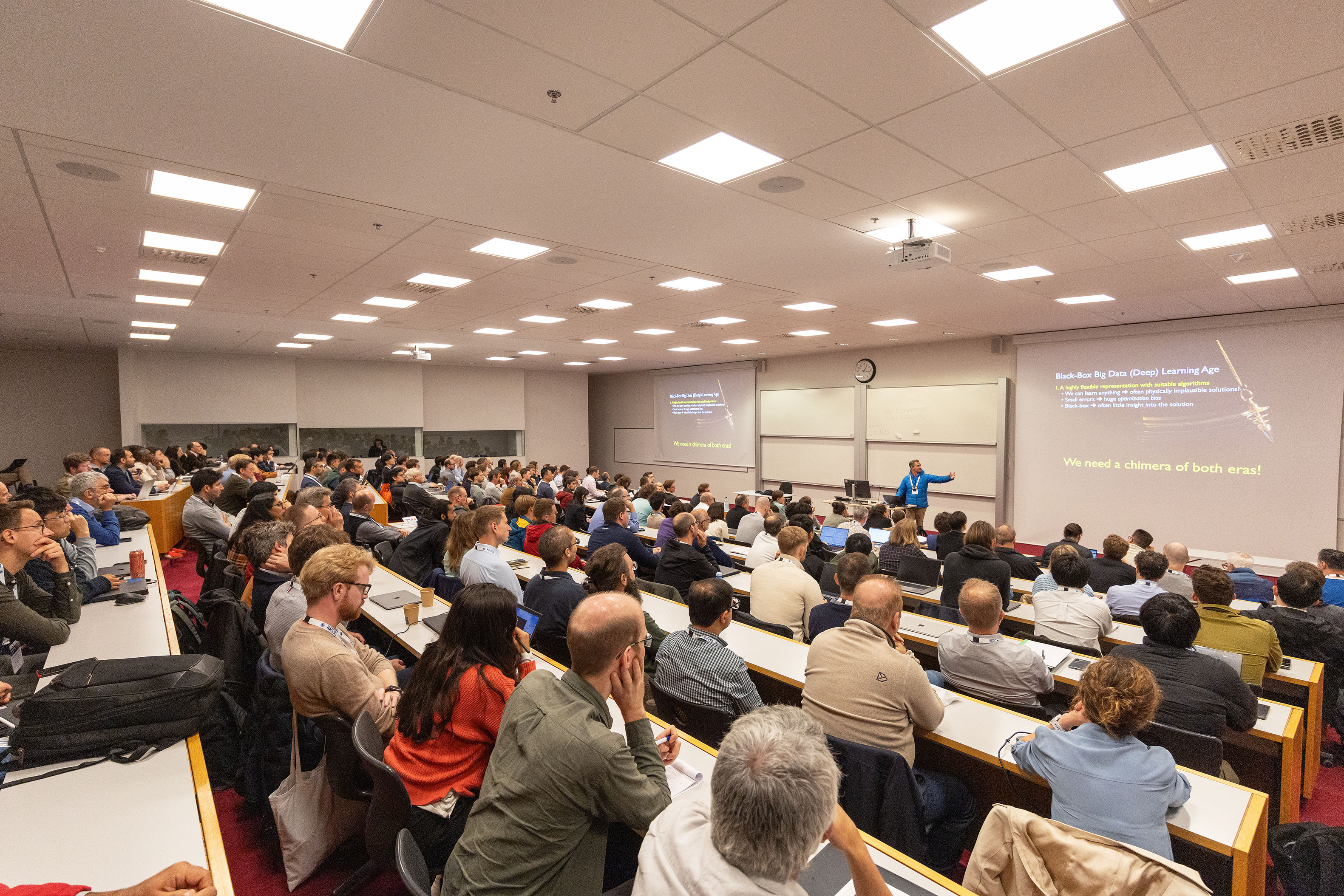
In addition to the technical sessions, ECC 2026 offered many opportunities for professional exchange. The conference opened with twelve workshops on current topics in control engineering. The programme was complemented by numerous high-level keynotes, including talks on robotics, reinforcement learning, data-driven methods and autonomous systems.
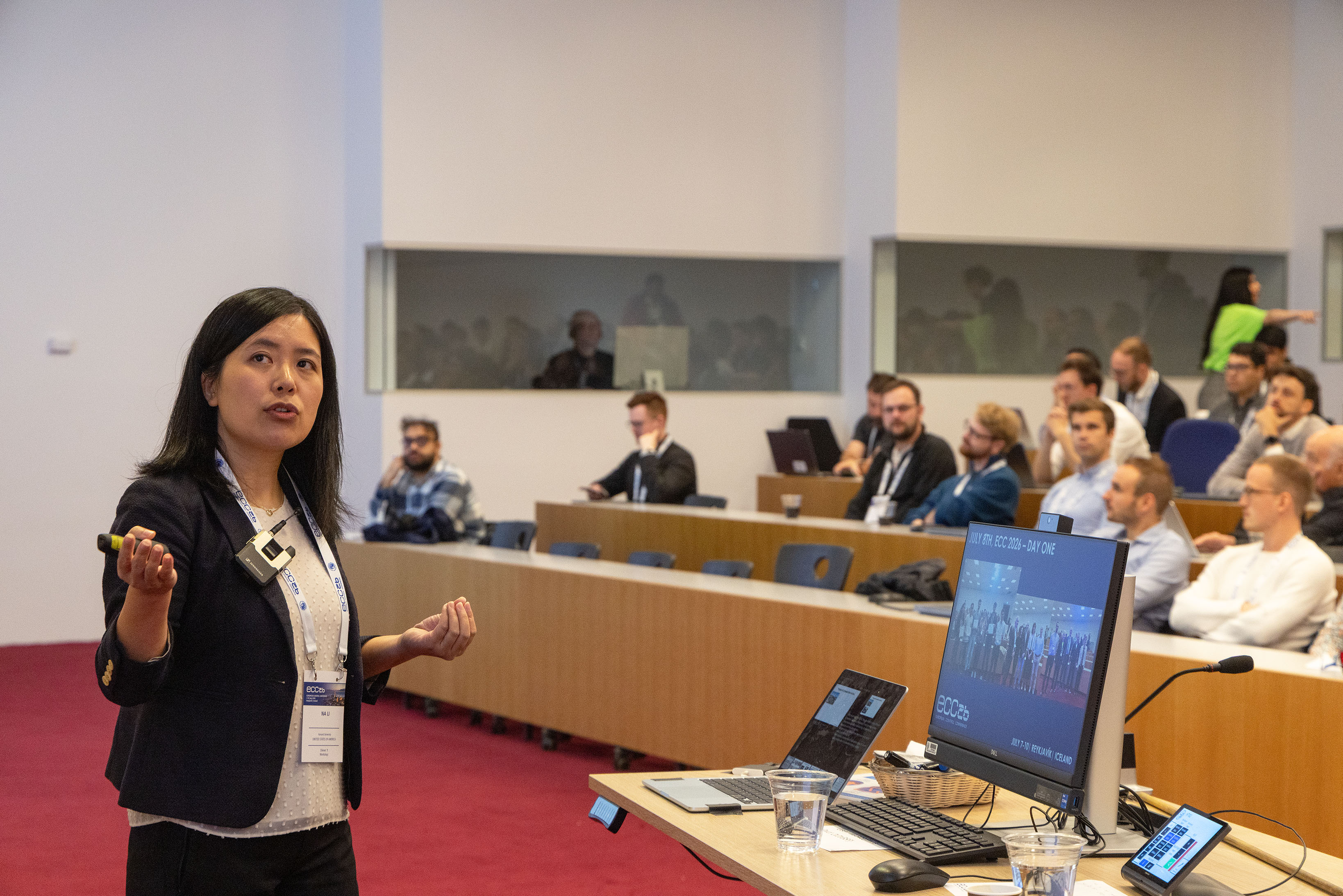
For Jörn Tebbe, the personal highlights of the conference included the talks by Jan Peters and Na Li in particular. Jan Peters spoke about “Inductive Biases for Robot Reinforcement Learning”, while Na Li presented “From Generative Models to Control: Representation-based Reinforcement Learning in Physical Systems”.
“The two keynotes were particularly exciting for me, because both speakers showed very clearly how closely control engineering, machine learning and data-based methods are now being considered together. Overall, the ECC was a great event: very well organised, scientifically strong and with plenty of room for exchange and discussion,” says Jörn Tebbe.
Conference Banquet at Harpa
Beyond the scientific programme, ECC 2026 also offered opportunities for exchange. One special programme highlight was the Conference Banquet at Harpa, the renowned concert hall and conference centre located at the harbour in Reykjavík. The venue’s distinctive architecture and location provided an impressive setting for conversations among the conference participants.
Further impressions from ECC 2026 are available here: https://ecc26.euca-ecc.org/?cn-reloaded=1
Auther: Mona Marie Brinkmann