

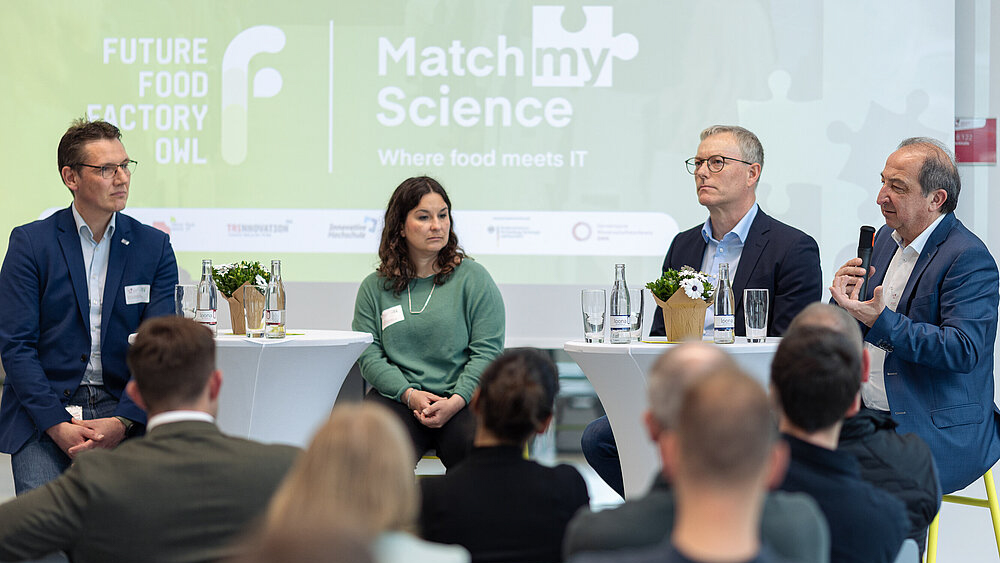
How can companies effectively utilize artificial intelligence in food production? What opportunities do data-driven applications already offer today—and what challenges must be taken into account? These were the questions addressed at the “Artificial Intelligence in Food Production” focus day held on May 7 at the Future Food Factory OWL on the Innovation Campus Lemgo.
The event brought together experts from academia and industry to shed light on current developments, practical examples, and future prospects surrounding the use of AI in the food industry. inIT contributed to the program with several presentations.
Thinking About AI and Cybersecurity Together
In his presentation titled “From Hype to Practice: The Impact of AI on Cybersecurity in IT and OT,” Prof. Dr. Henning Trsek, head of the Interconnected Automation Systems research group and director of the inIT institute, examined the effects of AI on industrial communication and production systems. He highlighted the potential AI offers for the automation and security of industrial processes and the new cybersecurity requirements that arise as a result.
“The question today is no longer whether AI will be used in production environments, but how we can ensure its use is safe and responsible. Especially at the intersection of IT and OT, this requires new approaches to cybersecurity,” said Prof. Dr. Henning Trsek.
Prof. Dr. Henning Trsek then shared his insights during the panel discussion titled “AI in Food Production: Old Wine in a New Bottle or a Real Opportunity?” Together with representatives from industry and academia, he discussed the potential, challenges, and practical experiences associated with the use of AI technologies.
Digital Product Passport: The Case of Coffee Production
In the “Match My Science” format, where current research projects are presented in short pitches, Philip Sehr from the Interconnected Automation Systems research group presented the Digital Product Passport in the context of supply chains and quality management.
Using the CinITo coffee bar as an example, he explained the Digital Product Passport throughout the coffee production process and demonstrated how information can be digitally recorded, transparently documented, and made accessible to various stakeholders along the entire value chain.
The approaches presented are based on the work of the DiPP research project (Digital Product Passport for Reliable Information Exchange in the Supply Chain). Together with partners from industry and research, the project investigates how trustworthy and tamper-proof information can be provided along supply and production chains.
Strong interest in the demonstrator
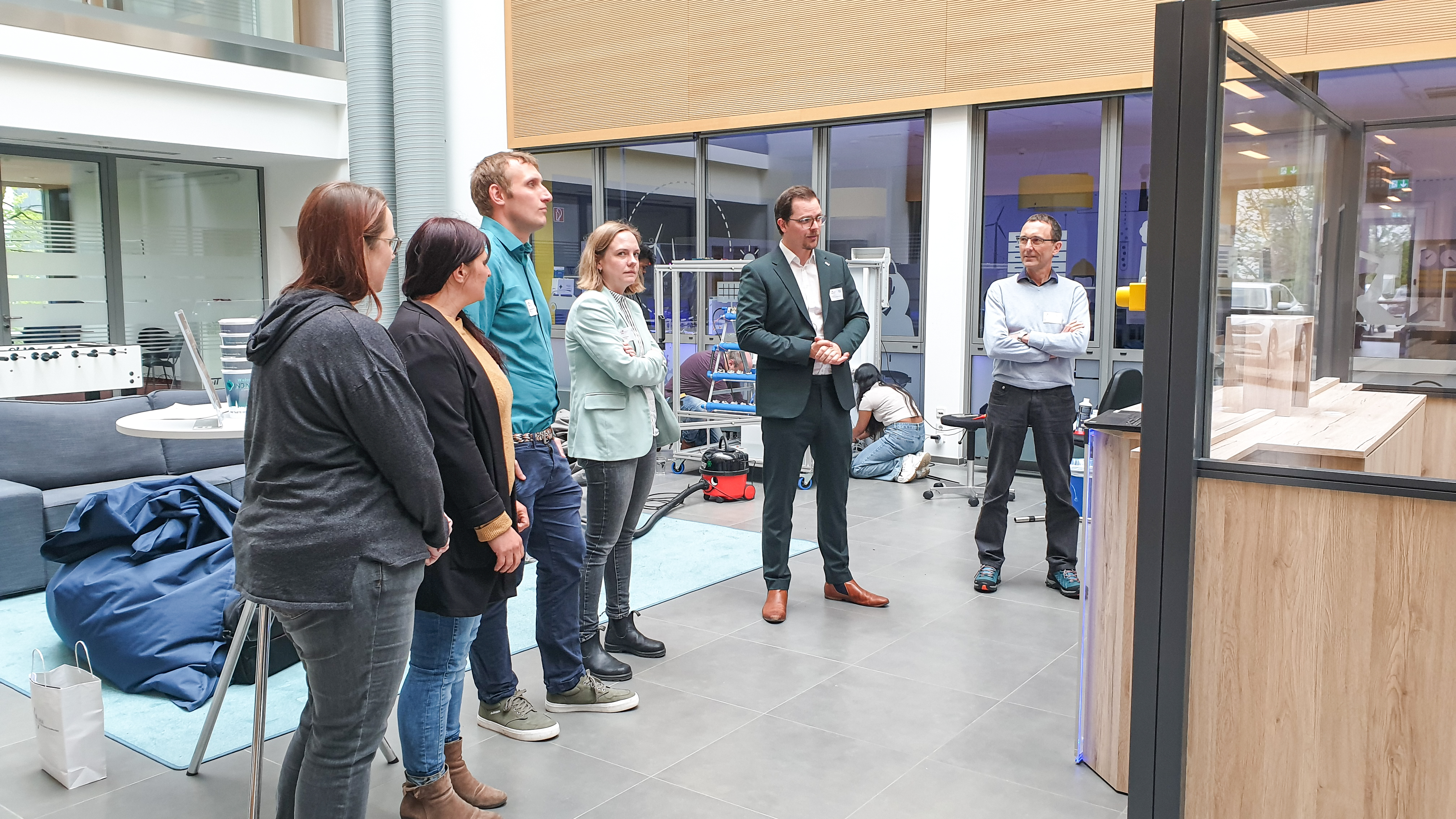
Afterward, many participants took the opportunity to engage in direct discussions at the demonstration station. The conversations focused in particular on the potential of the Digital Product Passport to enhance transparency, quality assurance, and traceability in production and supply processes.
“It offers an excellent opportunity to gain insights into how others work and to learn about different approaches to problem-solving,” says Philip Sehr about the exchange with the Focus Day participants.
Learn more about the Focus Day:https://www.th-owl.de/news/artikel/detail/fokustag-in-lemgo-kuenstliche-intelligenz-in-der-lebensmittelproduktion/
Auther: Mona Marie Brinkmann