

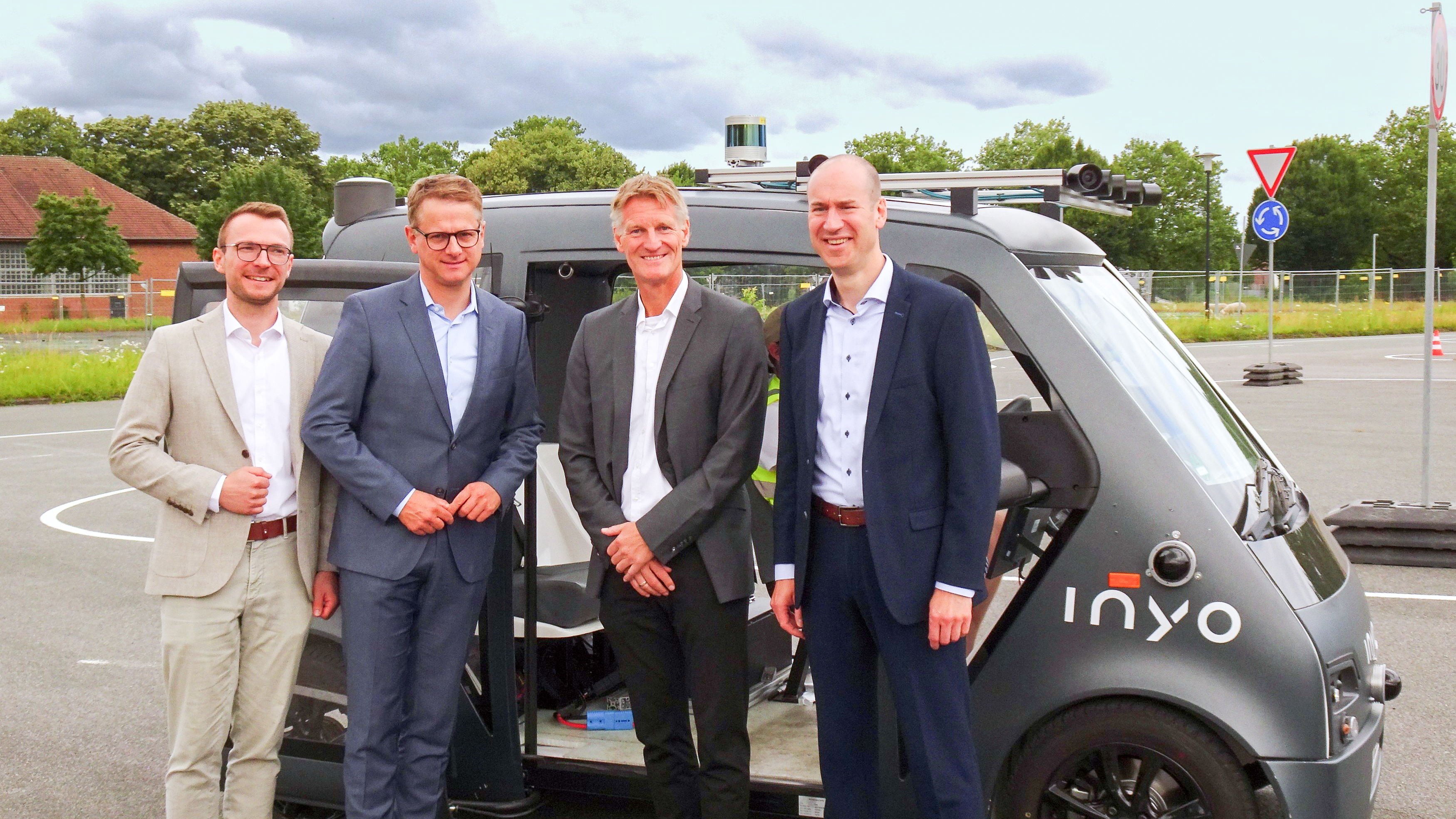
![[Translate to Englisch:] Ein autonomes NeMo-Fahrzeug fährt auf dem Testgelände während einer Demonstrationsfahrt.](https://www.init-owl.de/fileadmin/user_upload/DSC09059-2.jpg)
Autonomous vehicles must not only drive autonomously but also be able to respond safely to unexpected situations. As part of the collaborative research project NeMo.bil, inIT investigated how safety mechanisms for autonomous vehicles can be developed, simulated, and validated.
A New Mobility System for On-Demand Transport
After nearly three years of intensive research and development, the NeMo.bil project, funded by the German Federal Ministry for Economic Affairs and Energy with around €18 million, has successfully come to an end. The collaborative project aimed to develop an innovative mobility system for sustainable, on-demand passenger and freight transport.
The concept combines two complementary vehicle types: Smaller autonomous vehicles (Cabs) cover the first and last mile, while on longer routes they join together to form a vehicle convoy led by a larger vehicle (Pro). This approach offers new opportunities to combine individual mobility with the benefits of public transport, particularly in rural areas.
inIT Advances Safety for Autonomous Vehicles
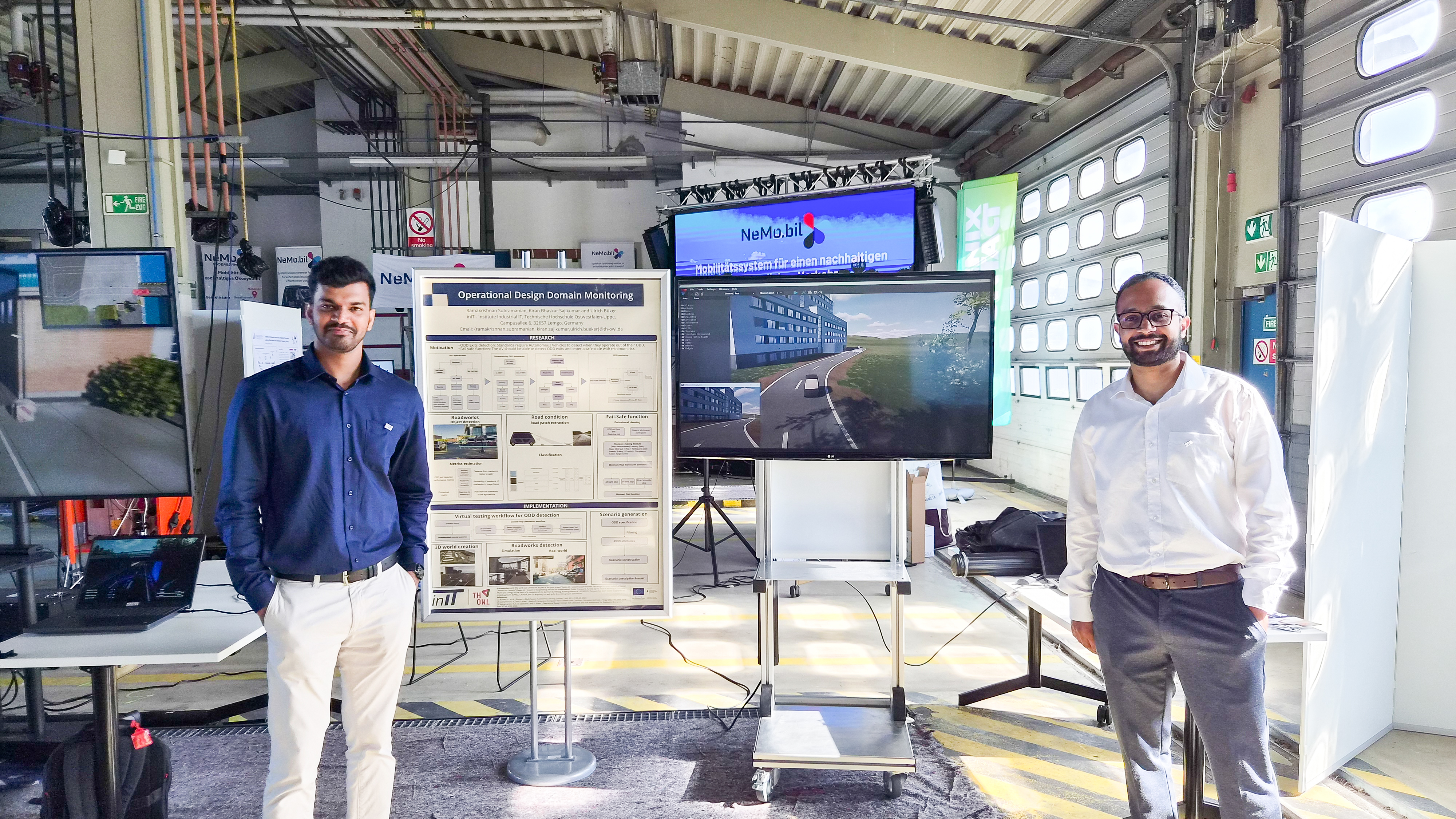
At inIT, the project was carried out by the Intelligent Systems research group led by Prof. Dr. Ulrich Büker. The team's research focused on safety aspects as well as the simulation and validation of algorithms for autonomous vehicles. Research associates Ramakrishnan Subramanian and Kiran Bhaskar Sajikumar focused on Operational Design Domain (ODD) monitoring, which determines whether an autonomous vehicle is operating within its intended conditions. The developed approaches were investigated and validated using simulation.
Project Results Presented at Closing Event
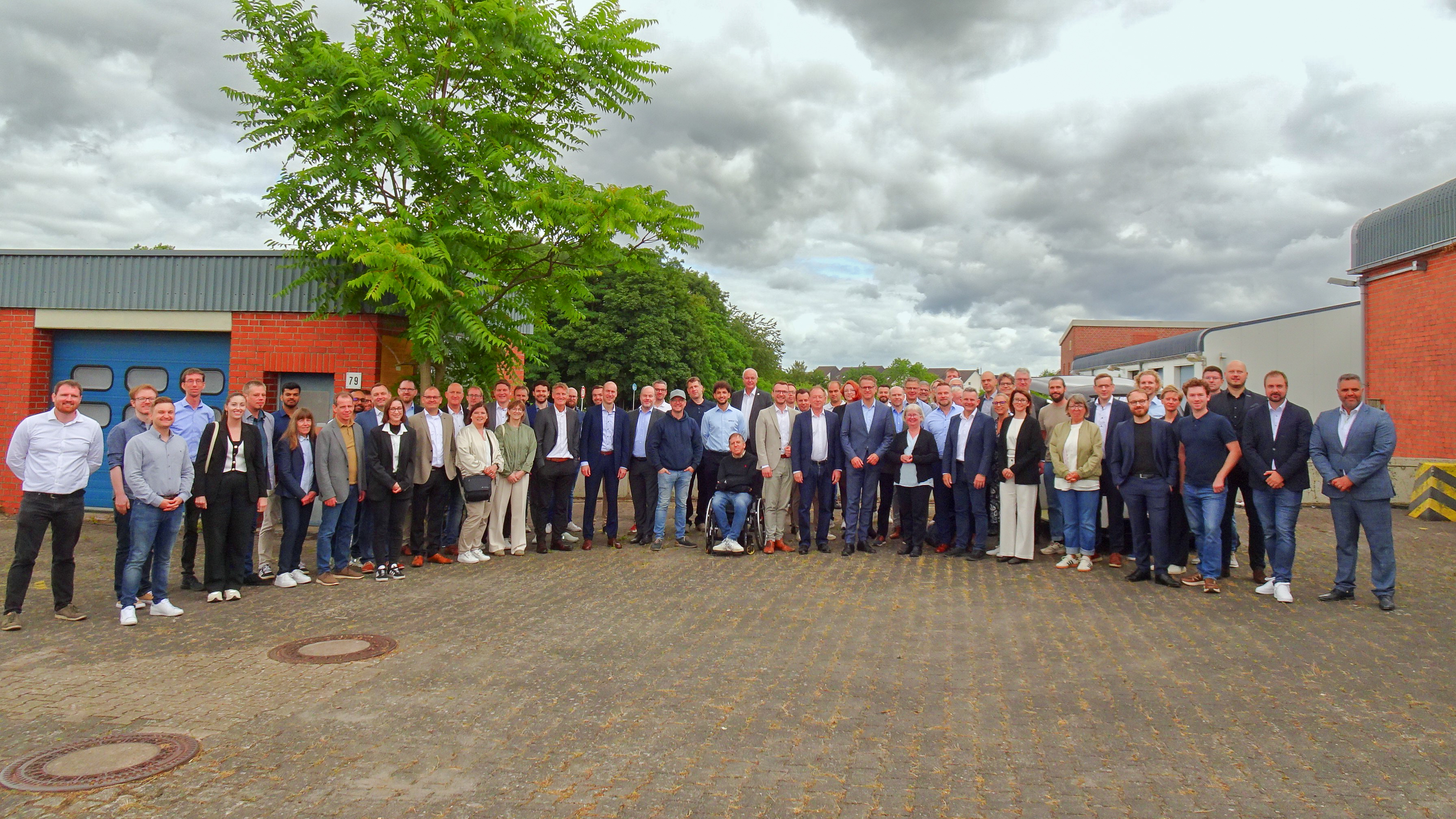
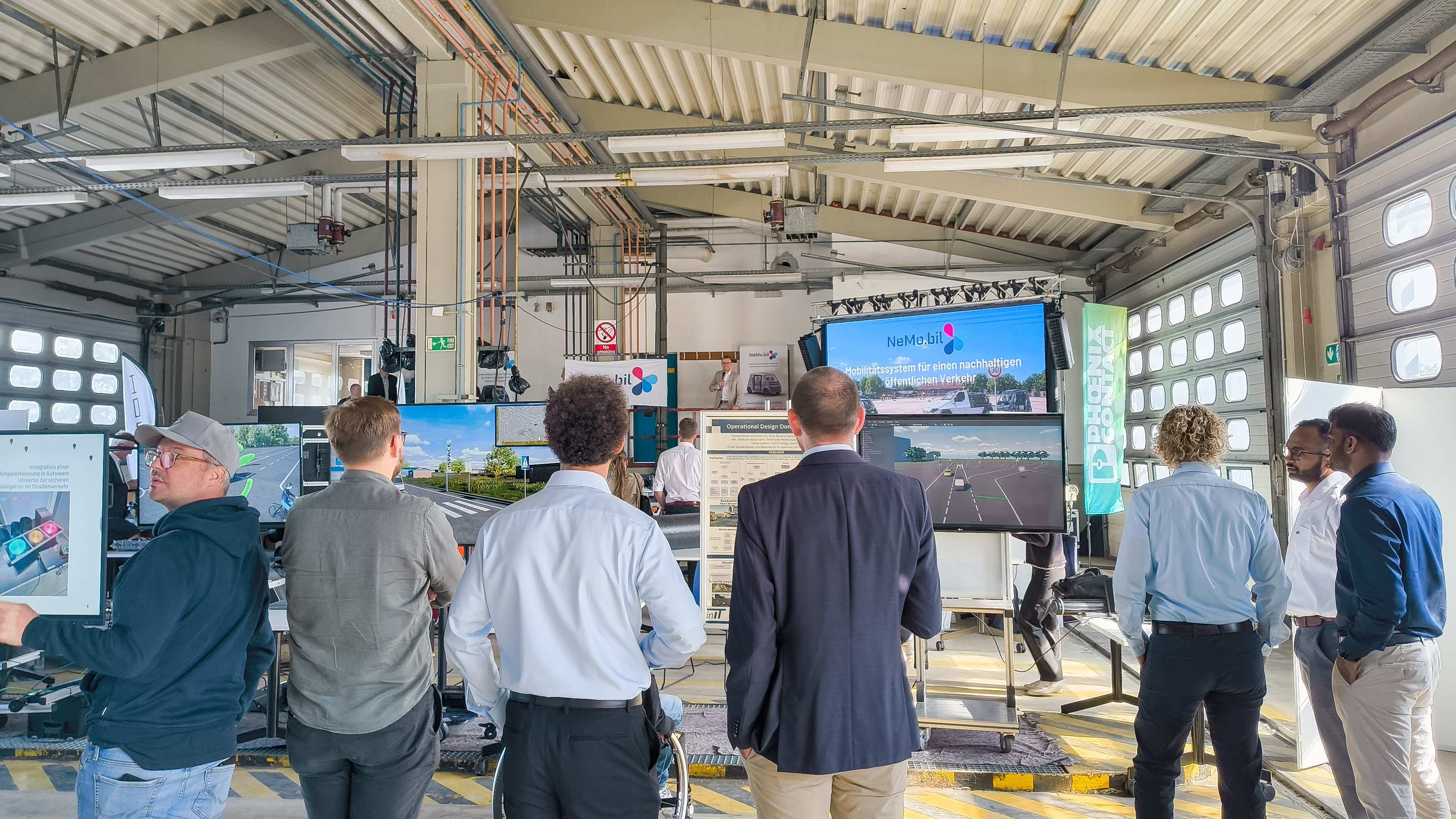
At the project's closing event, held at the Zukunftsquartier in Paderborn, the project partners presented the vehicles, digital applications, and technical systems developed throughout NeMo.bil for the first time as a complete mobility concept. Representatives from politics, industry, academia, and public administration gained insights into the project's outcomes and the potential of the innovative mobility system.
inIT also showcased its research results during the event. Research associates Ramakrishnan Subramanian and Kiran Bhaskar Sajikumar presented their work on Operational Design Domain (ODD) monitoring through a poster and a video. The demonstration illustrated different scenarios in which an autonomous vehicle detects roadworks outside its Operational Design Domain and automatically transitions to a safe state.
"NeMo.bil gave us the opportunity to explore important topics around the safety of autonomous vehicles together with partners from research and industry. The combination of modern sensors, simulation, and validation was especially valuable, as it allowed us to develop and test our approaches under realistic conditions," says Ramakrishnan Subramanian, research associate in the Intelligent Systems research group at inIT.
Shaping the Future of Mobility
The insights gained throughout the project provide an important foundation for future research in the field of autonomous mobility. The experience gained in simulation, validation, and safety monitoring will help make autonomous vehicles more reliable and safer.
The project's significance for the region and beyond was also highlighted by Dr. Carsten Linnemann, Member of the German Bundestag and Chairman of the Advisory Board of NeMo e.V.:
"With the NeMo.bil project, NeMo e.V. has launched an initiative from Paderborn that has attracted considerable attention both nationally and internationally. All project partners have delivered impressive achievements. I very much welcome NeMo e.V.'s efforts to drive the transfer of the research results into concrete applications."
Strong Project Partners with a Shared Vision
NeMo.bil was made possible through the close collaboration of numerous partners from industry and academia. inIT would like to thank all project partners for their trust, the valuable exchange of expertise, and the shared progress towards safe and sustainable autonomous mobility.
The NeMo.bil consortium brought together Aspens GmbH, AVANCO Composites GmbH, CADFEM Germany GmbH, CP Tech GmbH, the German Aerospace Center (DLR), dSPACE Group SE & Co. KG, FIWARE Foundation e.V., HOLON GmbH, INYO Mobility GmbH, LIA GmbH, Neue Mobilität Paderborn e.V., PHOENIX CONTACT E-Mobility GmbH, Poppe + Potthoff GmbH, Reisewitz GmbH & Co. KG, Augsburg University of Applied Sciences, TU Dortmund University, Paderborn University, and the WZB Berlin Social Science Center.
Official press release:https://nemo-bil.de/das-vom-bund-gefoerderte-projekt-nemo-bil-feierte-erfolgreichen-abschluss/
Autorin: Mona Marie Brinkmann