

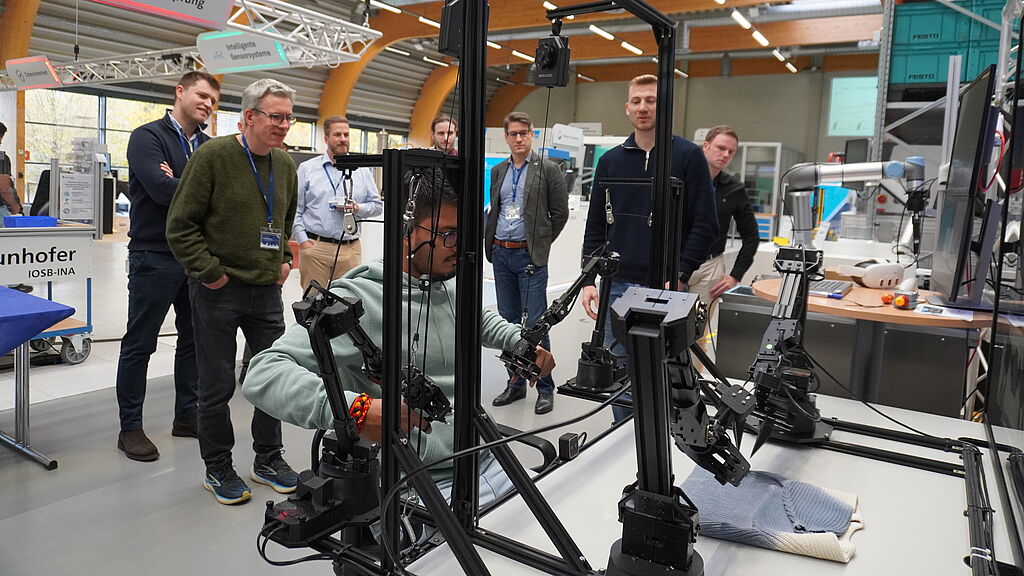
How can AI and modern image processing make production processes smarter, more precise and more efficient? At the 10th Annual Colloquium on Image Processing in Automation (BVAu) on 9 November 2026 at the Innovation Campus Lemgo, the latest research findings were brought together with industrial applications. The focus was on AI-supported image processing, intelligent sensor systems and new solutions for automated quality inspection.
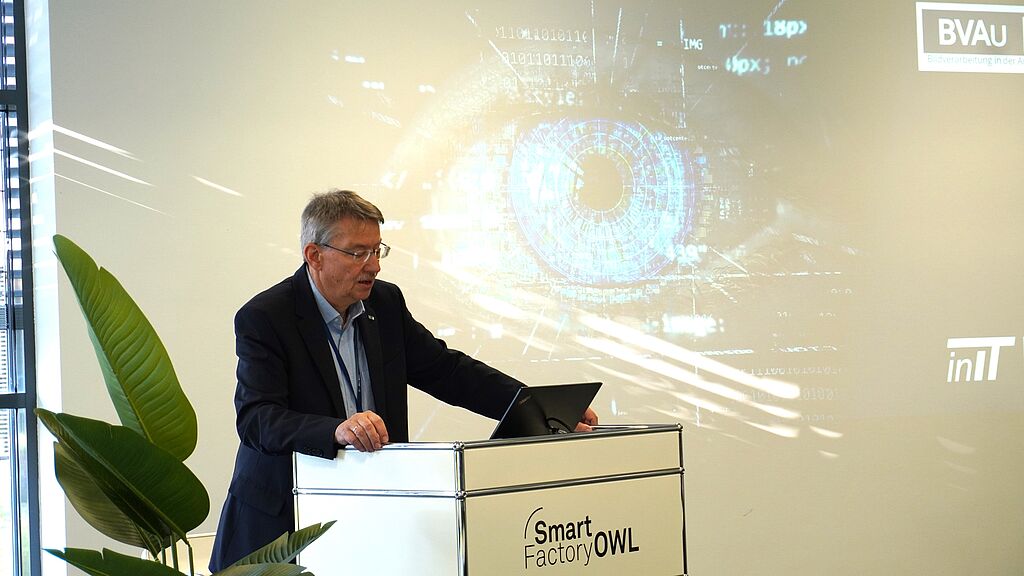
Welcome address by Senior Professor Dr. Volker Lohweg
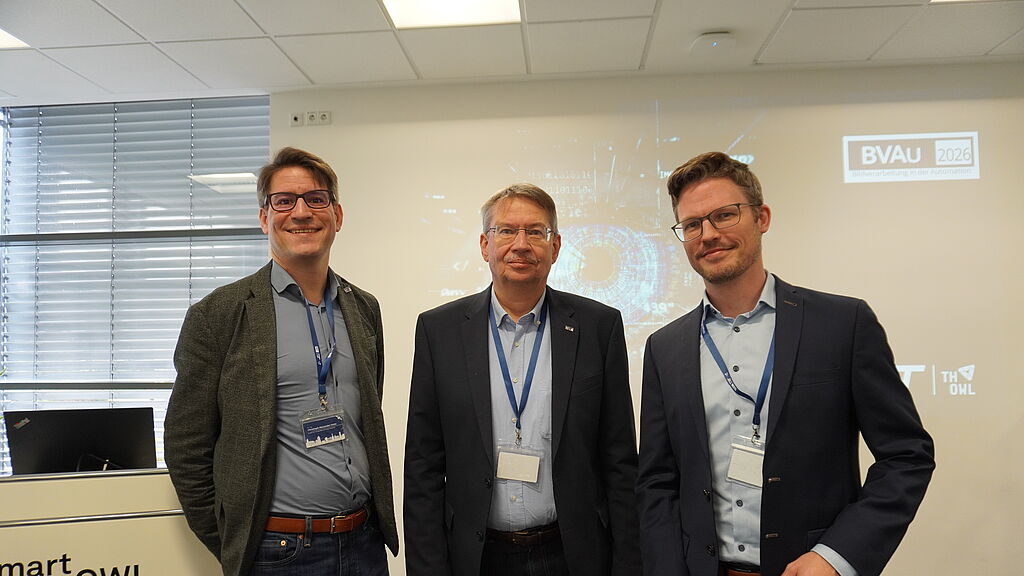
Conference chair Senior Professor Dr. Volker Lohweg warmly welcomed the around 30 participants from research and industry to the SmartFactoryOWL for the colloquium. Together with Dr. Christoph-Alexander Holst, he chaired the conference, which is organised every two years by the Discrete Systems Working Group under his leadership. At the start, he asked all participants to stand and pay tribute to Prof. Dr. Ulrich Büker, who passed away on 27 October 2026 and was a member of the BVAu Programme Committee.
In his opening remarks, he expressed particular delight that the biennial image processing colloquium had proved its worth as a format and was being held for the 10th time at the Innovation Campus Lemgo. He explained, however, that image processing now needed to adopt a broader approach. Modern image processing involves the fusion of image processing algorithms, big data and AI. This was reflected in the sessions “Resource-efficient and adaptive AI for computer vision”, “Multimodal quality inspection and information fusion” and “Representations and specialised vision applications”.
Keynote by Prof. Dr. Klaus Neumann
In his keynote address entitled “AI-Robotics – the importance of data for the manufacturing of the future”, Prof. Dr. Klaus Neumann highlighted the importance of data for the robotics of the future. Prof. Neumann is Professor of Collaborative Robotics and AI at Bielefeld University and also Head of Research for Cognitive Automation at Fraunhofer IOSB-INA in Lemgo. In his presentation, he discussed the history of robotics. In his view, robotics will become a data science; AI on its own is too inefficient. He advocated combining traditional methods with AI methods, learning from mistakes and always incorporating a reality check.
Prof. Neumann then answered questions from the audience, for example on the sustainable and more efficient design of AI and robotics systems.
Exchange between research and industry
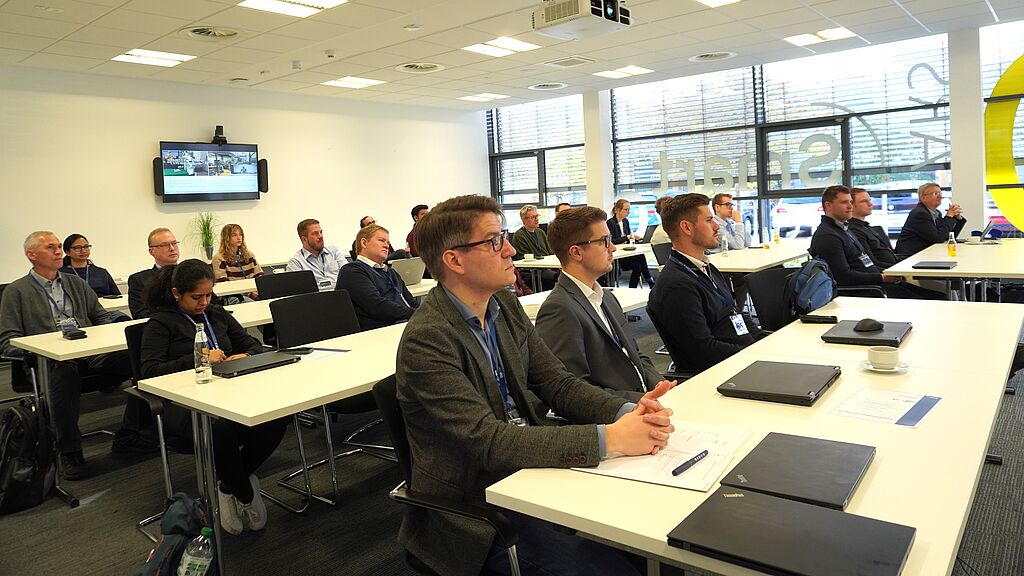
As the BVAu was aimed at specialists and managers from the fields of industrial image processing, automation technology and robotics, as well as at researchers and developers, the informative presentations sparked lively discussions on current technologies, research findings and practical applications of modern image processing. The varied programme of the annual colloquium thus provided an opportunity to learn about new developments, examine technical challenges and forge links between research and industrial practice.
At the end, Senior Professor Dr. Volker Lohweg briefly summarised the specialist colloquium, bid farewell to the participants and invited the community to the BVAu 2028. Dr. Christoph-Alexander Holst will then take over as conference chair.
Guided tour of the SmartFactory and festive evening programme
The BVAu 2026 was rounded off with a guided tour of the SmartFactory OWL and a festive conference dinner at the Kesselhaus in Lemgo, organised jointly with the KommA Colloquium. Dr. Christoph-Alexander Holst, who had designed and organised the programme for the specialist colloquium, emphasised: “In addition to the technically strong presentations, the conference participants engaged in in-depth discussions about new technologies in image processing and their potential applications. I was personally very pleased by this.”