

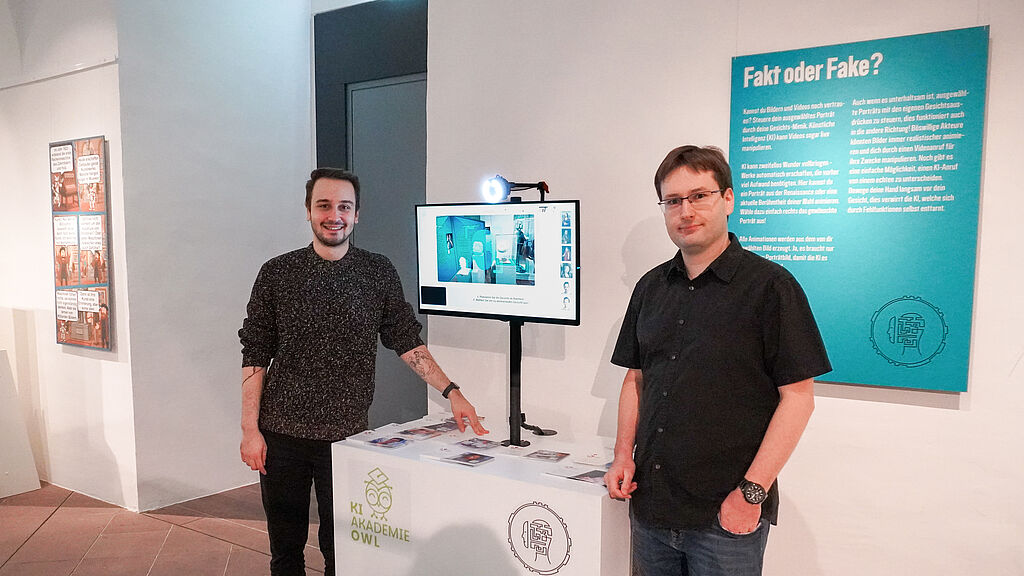
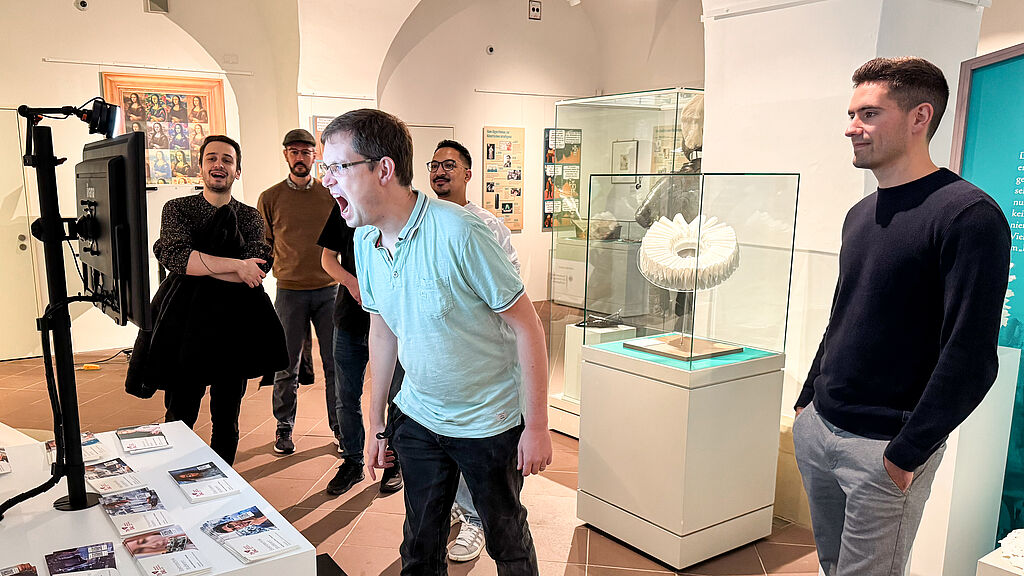
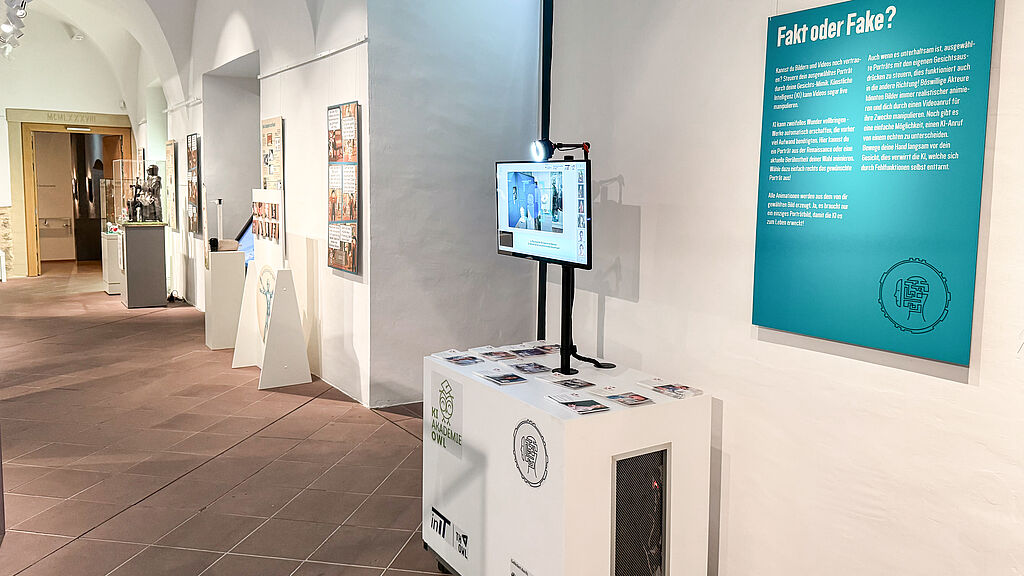
How real is what we see on a screen? With ‘Imposter’, inIT presents an interactive demonstrator in the special exhibition ‘A KInd of Art. Artificial Intelligence Meets (Weser) Renaissance’ at the Weser Renaissance Museum in Brake Castle, which impressively shows how easy it is to manipulate digital identities. It was developed by Erdem Sengün and Alexander Toppka, who are both part of the Interconnected Automation Systems research group headed by Prof. Dr. Henning Trsek.
Deceptively real: AI as a security risk
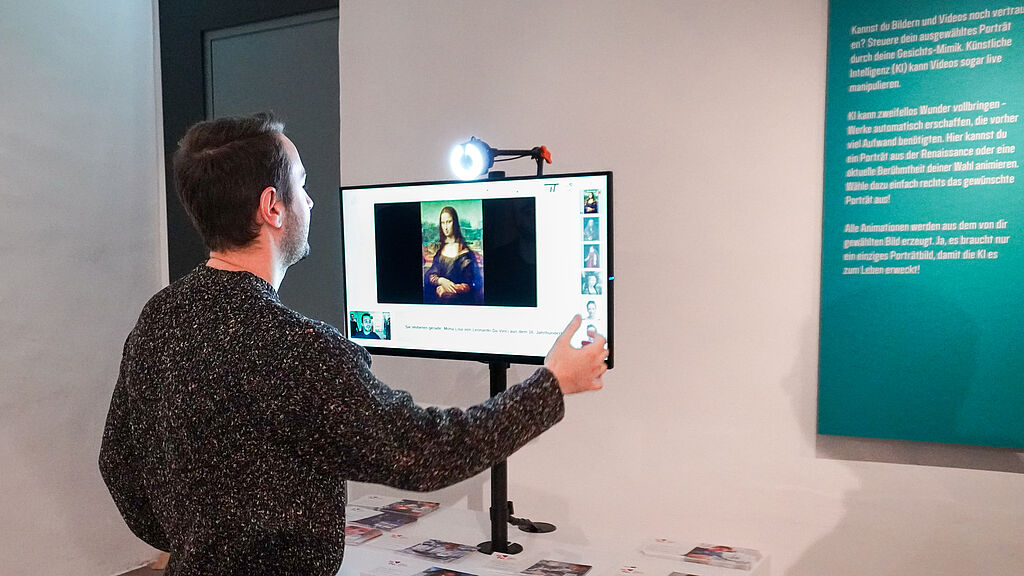
Angela Merkel or Mona Lisa – who would you like to be today? The demonstrator uses the open-source LivePortrait model to animate a photo with visitors' facial features in real time. First, participants select one of the provided portraits, which include well-known historical or public figures. The system then transfers their facial expressions to the selected face via webcam. The result is a lifelike 'deepfake' animation that demonstrates how easily digital images can be created.
A complex technical process lies behind the application: each webcam image is transferred to the AI model, which then transfers the movements to the source image. This computationally intensive process requires parallel processing by modern graphics cards, clearly demonstrating the power of today's deep learning models.
Raising awareness
The demonstrator aims to highlight the risks of digital deception, such as fraudulent activity or identity theft during video conferences. Visitors can experience for themselves how convincing, yet also how error-prone, such AI-based manipulations can be.
‘Just because something looks real on a screen, doesn't mean it is,’ says Erdem Sengün. ‘Imposter demonstrates how important critical questioning and media literacy are when dealing with AI-generated content.‘
Special exhibition until mid-December
With the special exhibition ‘A Kind of Art’, the Weser Renaissance Museum at Brake Castle builds a bridge between the past and the future. It can be seen at Schloss Brake in Lemgo until 14 December 2025. Visitors can discover various facets and applications of artificial intelligence there.
Further information is available at:https://museum-schloss-brake.de/portfolio_page/akindofart/