

How does a good idea become a viable mobility system?
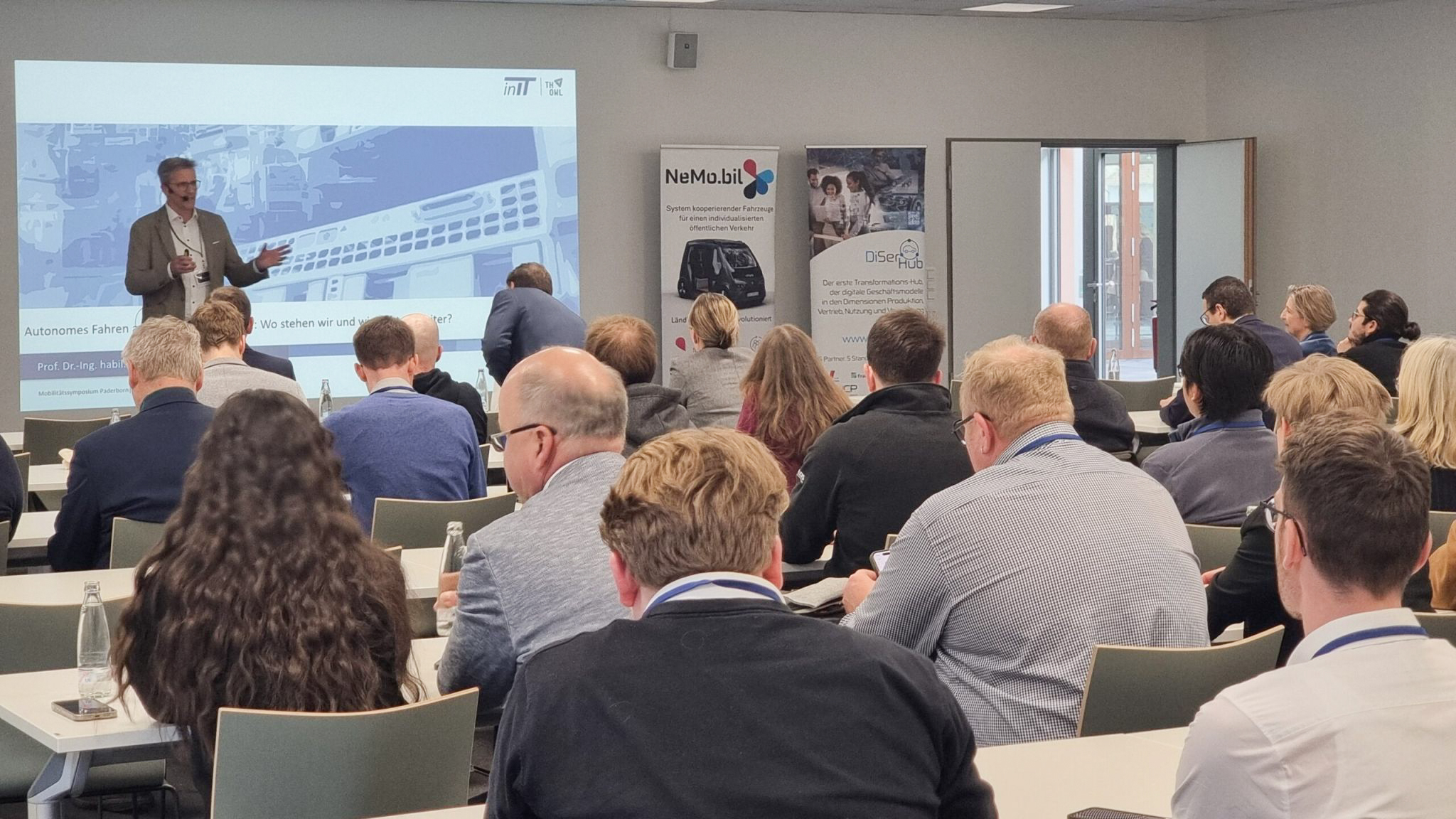
This question was the focus of the Mobility Symposium 2026 at the Zukunftsmeile Paderborn. Together with SICP – Software Innovation Campus Paderborn and Neue Mobilität Paderborn e.V., stakeholders from science, business, and the public discussed how innovative mobility solutions can make the transition from the pilot phase to widespread application.
The focus was on scaling, data rooms, autonomous systems, and viable business models. As one of a total of six keynote speakers, Prof. Dr. Ulrich Büker contributed his perspective from his research at inIT.
Autonomous driving: Safety as a prerequisite for scaling
In his keynote entitled “Where does Germany stand today in terms of autonomous driving? What are the biggest hurdles?”, Prof. Dr. Ulrich Büker assessed the current state of development and highlighted the requirements for the safe operation of automated vehicles.
"Scaling begins with safety. Only when automated driving functions are systematically validated and embedded in robust overall architectures can they function reliably in everyday life."
In the NeMo.bil joint project, inIT is supporting the work package for developing the automated driving function of the so-called cabs. This involves defining safety requirements and developing software for automated driving to ensure safe passenger transport.
Poster presentation: Decisions for a safe state
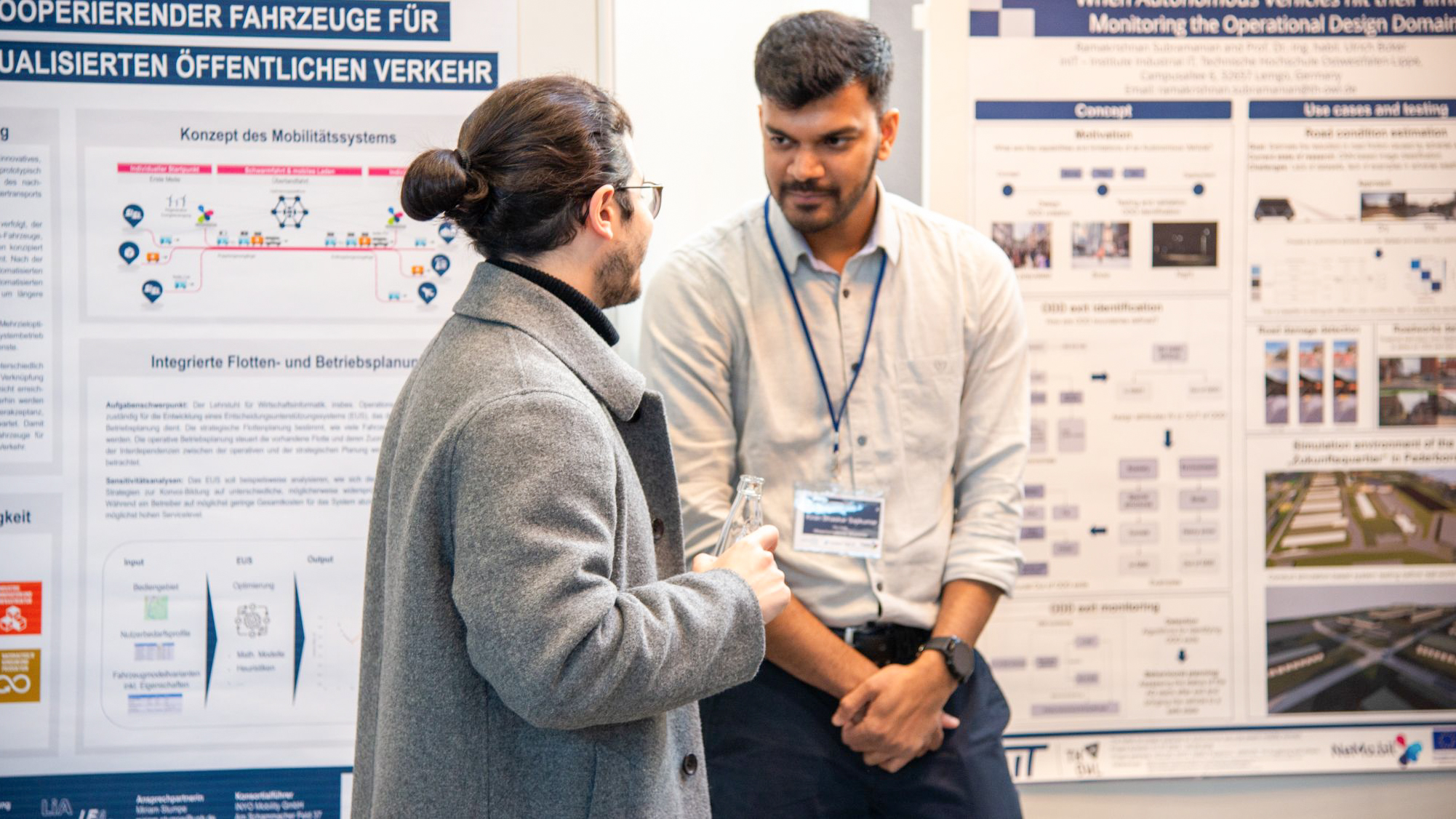
inIT was also represented in the poster session. Kiran Bhaskar Sajikumar, research assistant in the “Intelligent Systems” working group headed by Prof. Dr. Ulrich Büker, presented research results on ODD exit Identification and ODD Exit Monitoring.
The Operational Design Domain (ODD) defines the environmental and operating conditions under which a highly automated vehicle can be operated safely. If the system leaves this defined area, it must select strategies to reduce risk, known as minimum risk maneuvers. The poster showed how a decision logic for selecting such measures can be developed and structured.
Scaling as a joint task
The discussions made it clear that the path from piloting to regular operation is a system task. In addition to technological excellence, interoperable data structures, regulatory clarity, and economically viable business models are needed.