

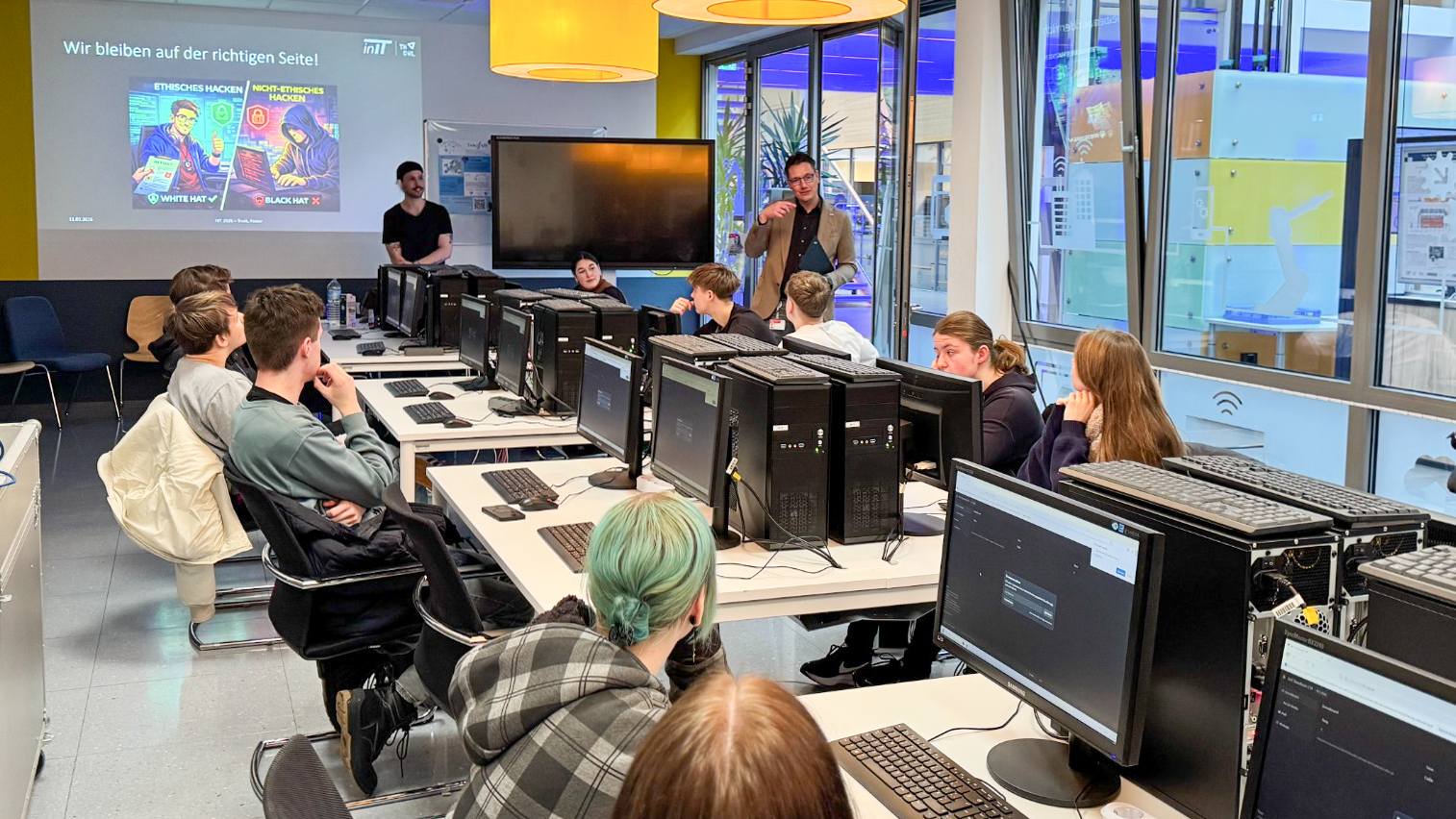
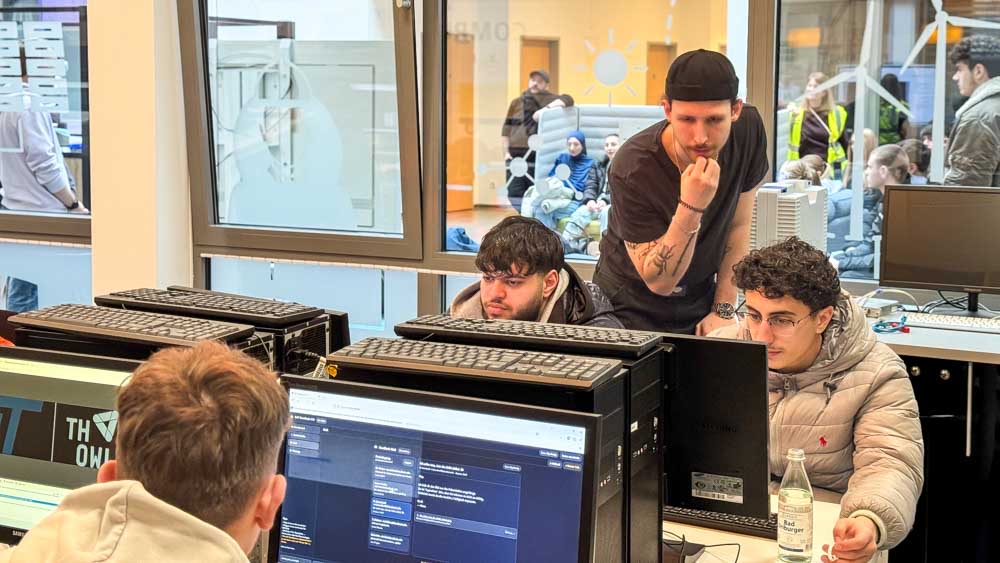
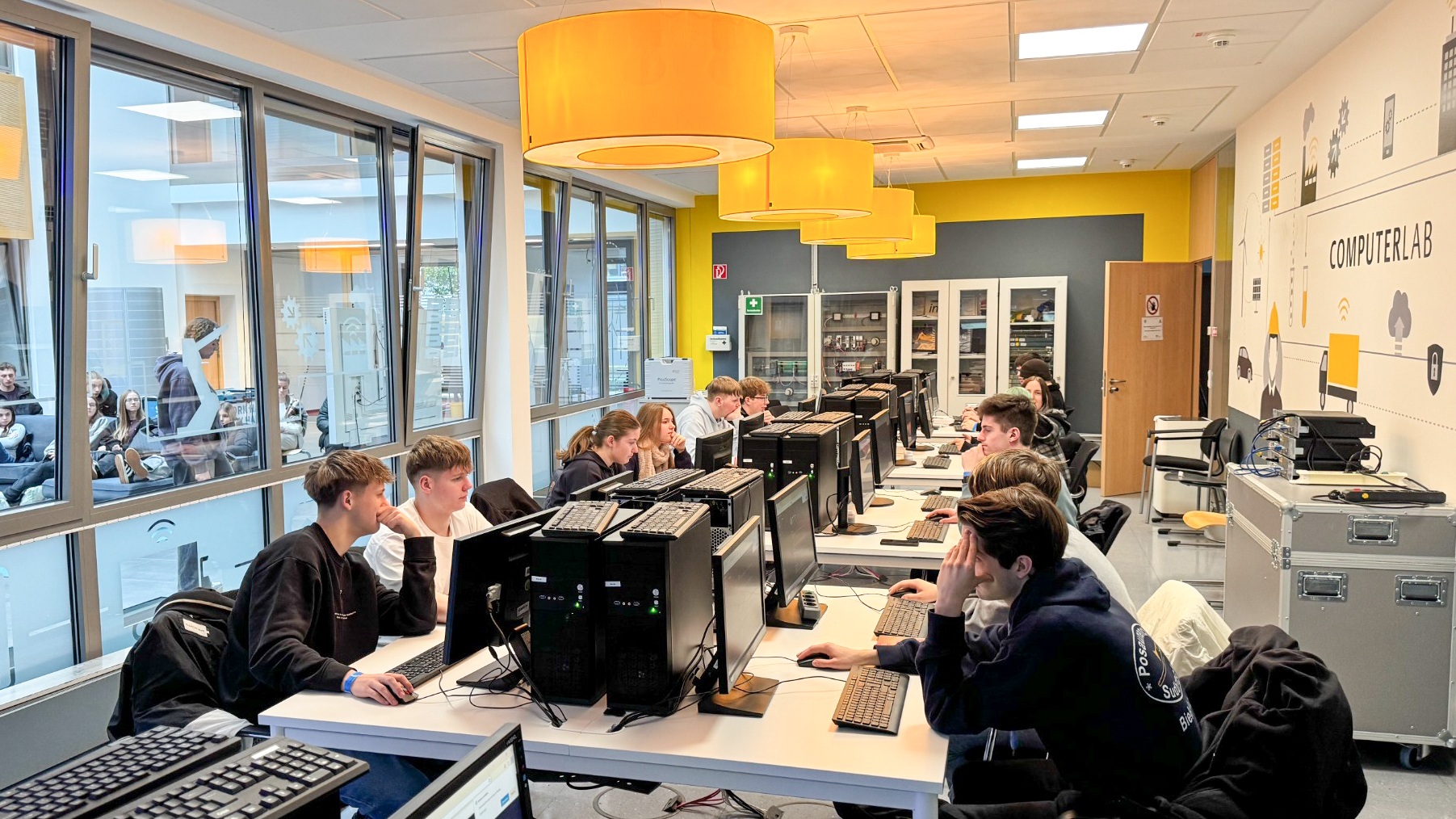
As part of the 2026 University Information Days, inIT ran an interactive cybersecurity workshop. Prospective students were able to experience for themselves how cybersecurity works in practice in the inIT computer lab.
What does it actually mean to find security vulnerabilities before others do? Participants could try their hand at cracking passwords. Finding hidden codes. Identifying vulnerabilities. What initially sounds like something out of a movie became a practical learning experience here.
Robin Foster is an Offensive Security Certified Professional (OSCP) who works in Prof. Dr. Henning Trsek's research group. Together, they designed the workshop. Colin Voigt led the four sessions on both days of the event, supporting participants with their first practical steps.
“The students' interest was clearly palpable. It quickly became apparent how motivated the teams were to tackle the challenges,” says Colin Voigt. “In the limited time available, most participants managed to find more than half of the flags.”
Understanding security by attacking it
The workshop presented participants with a realistic scenario: they were tasked with reviewing the cybersecurity of the fictional company, Deadlock GmbH. Acting as ethical hackers, they were permitted to attack IT systems to identify vulnerabilities and close security gaps before real attacks could occur. The workshop was conducted in 'Capture the Flag' (CTF) mode, in which teams had to locate hidden codes within systems, files, or applications. This required analytical thinking, teamwork, and responsible action.
Hacking responsibly
“It is important to us to demonstrate that cybersecurity is not just an abstract lecture topic, but a highly relevant and exciting field of work involving social responsibility,” emphasises Prof. Dr. Henning Trsek. “If you want to understand how systems are protected, you also have to learn how they can be attacked — exclusively within the legal framework, of course.”
Around 80 students seized the opportunity to participate in the four workshops. This demonstrated the value of interactive formats for study orientation, as well as the practical and application-oriented nature of the degree programmes offered by the Department of Computer Science and Automation (IAT).