

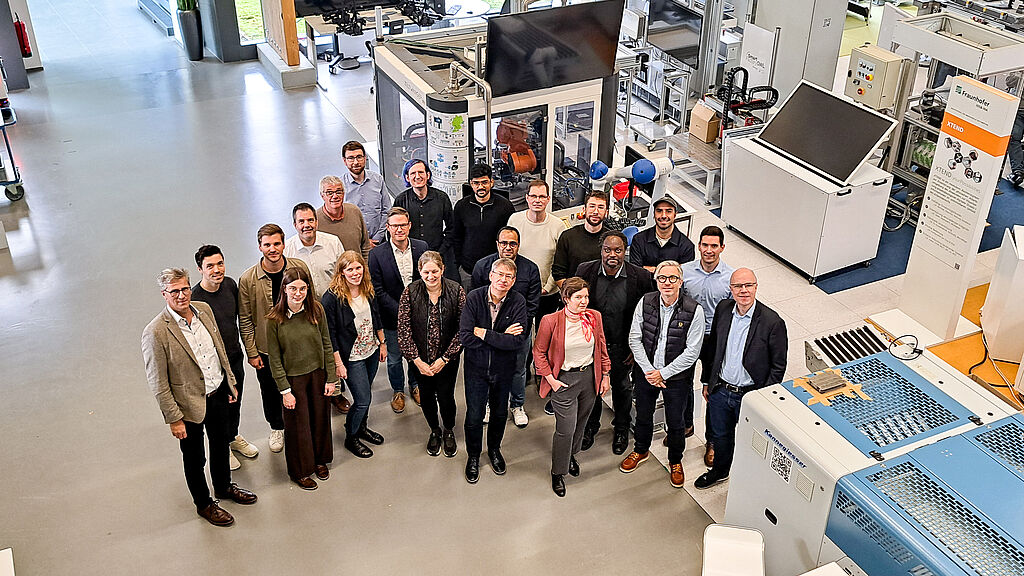
From teaching concepts to workshops to museum exhibitions: at the AI Academy OWL project meeting at SmartFactoryOWL in Lemgo, the project partners presented various approaches to teaching artificial intelligence beyond the university context from different perspectives.
Exchange on research, teaching and transfer
On 31 October, around 20 representatives from the participating universities and research institutions met at SmartFactoryOWL, where inIT hosted the event. There, participants presented their current activities and discussed prospects for research, teaching, and knowledge transfer.
Particular attention was paid to the numerous outreach activities through which the ‘Artificial Intelligence’ consortium engages different target groups with the topic. These include regional innovation festivals, practical school and further education programmes, open workshop series, public lectures and creative communication initiatives. Together, they examined how AI research can encourage dialogue between academia, industry and the public.
Four universities pool AI expertise
The AI Academy OWL is a joint project between Bielefeld University, Paderborn University, Bielefeld University of Applied Sciences and Technische Hochschule OWL. The aim of the alliance is to pool expertise in the field of artificial intelligence, gain a better understanding of the risks associated with large AI models and, at the same time, develop energy- and data-efficient AI solutions.
Excursion to the special exhibition at Brake Castle
In the afternoon, the participants visited the Weser Renaissance Museum at Brake Castle, where they were able to experience and try out the special exhibition ‘A Kind of Art. Artificial Intelligence Meets (Weser) Renaissance’ for themselves.
Strong partners & shared responsibility
‘At the AI Academy OWL, strong research partners are working together to shape artificial intelligence in a responsible way,’ explains Prof. Dr. Markus Lange-Hegermann, who organised the meeting. ‘TThis close, interdisciplinary collaboration generates knowledge that has an impact not only in research but also in society.’