

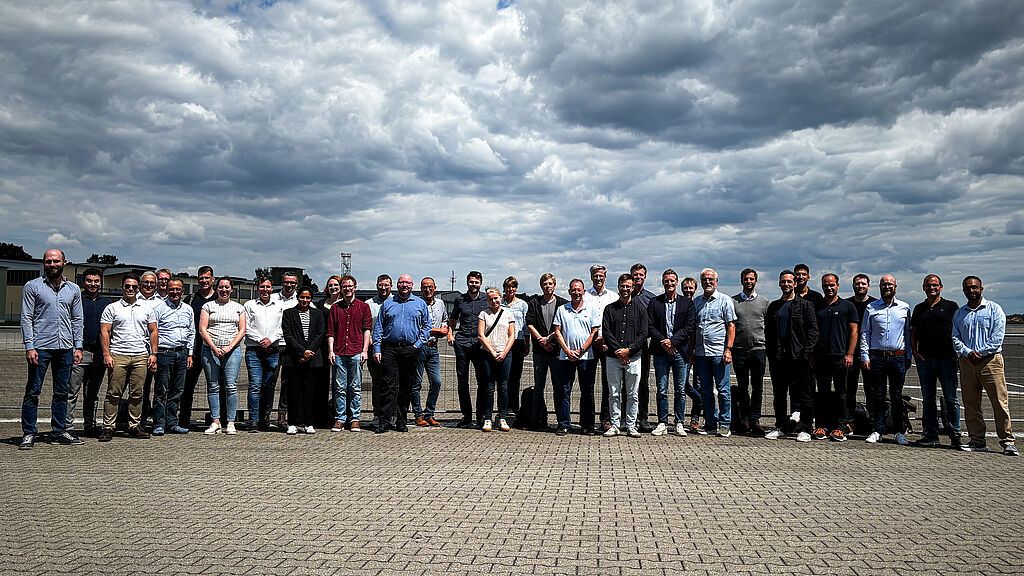
How can multiple vehicles be cooperatively controlled in road traffic? This is the question addressed by the NeMo.bil research project. At the milestone meeting at the ADAC test site in Penzing, the focus was on current results and a practical driving demonstration. Prof. Dr. Ulrich Büker was on site together with his research associate Ramakrishnan Subramanian to celebrate the successful completion of the first two milestones with the project consortium.
Technological progress in real operation
NeMo.bil stands for 'New Mobility' and aims to develop a swarm-like mobility system. The project focuses on an innovative concept for sustainable, demand-oriented passenger and freight transport in rural areas, with the aim of enabling individual public transport (iÖV).
At the heart of the system are electrically autonomous, digitally networked vehicles (NeMo.Cabs), which combine with a larger towing vehicle (NeMo.Pro) to form a convoy. This enables them to travel long distances in an energy-efficient manner as part of a swarm. Upon reaching the destination region, the cabs separate and navigate to their final destinations individually.
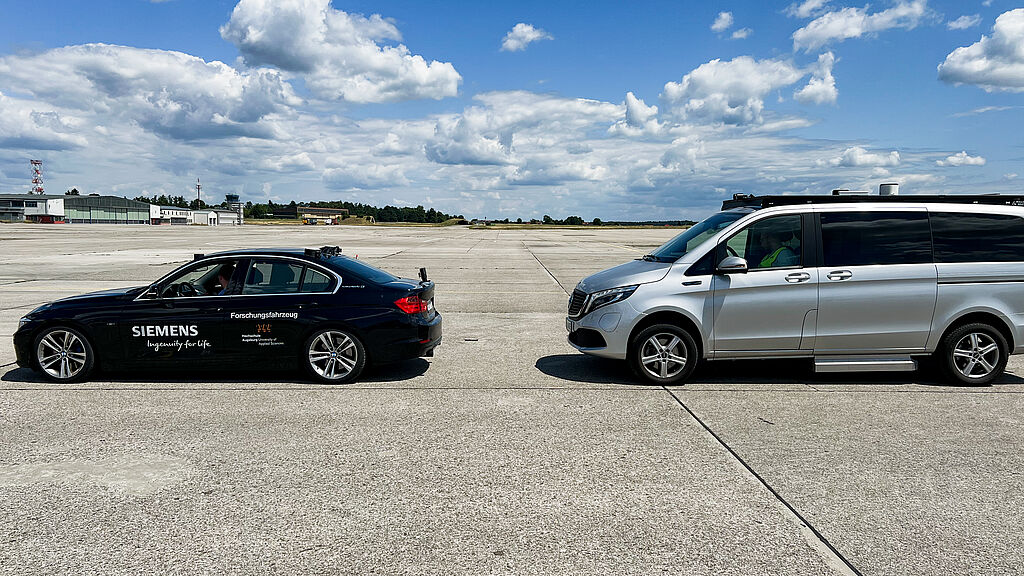
An important technical milestone for the future overall system was the live demonstration of a platooning scenario, which showed the cooperative movement of two vehicles.
inIT develops driving function for automated cabs
inIT is involved in the project to develop the automated driving function for the cabs. The work is being carried out by the ‘Intelligent Systems’ working group led by Prof. Dr. Ulrich Büker. Together with his team, he is supporting the development of the control software and sensor technology and defining the safety-related requirements to ensure reliable and safe vehicle operation.
Interdisciplinary cooperation as a success factor
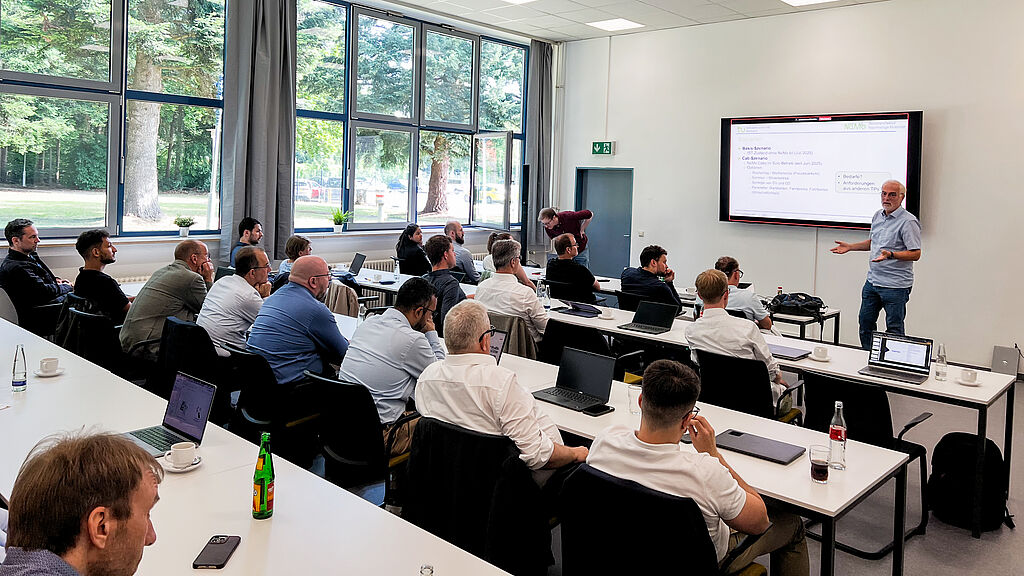
In addition to the driving demonstration, the project participants used the meeting for topic-specific workshops. Here, previous findings were reflected upon, challenges discussed and ideas for the next project phase collected. The successful completion of the first two milestones shows that the project is well on track.
‘The successful milestone meeting showed how practically oriented and solution-focused all project partners are in their collaboration and how strong our consortium is. The driving demonstration was a real highlight and an important step forward for cooperative mobility systems,’ summarises Prof. Dr. Ulrich Büker.