




The Optical & Digital Document Security (ODDS)
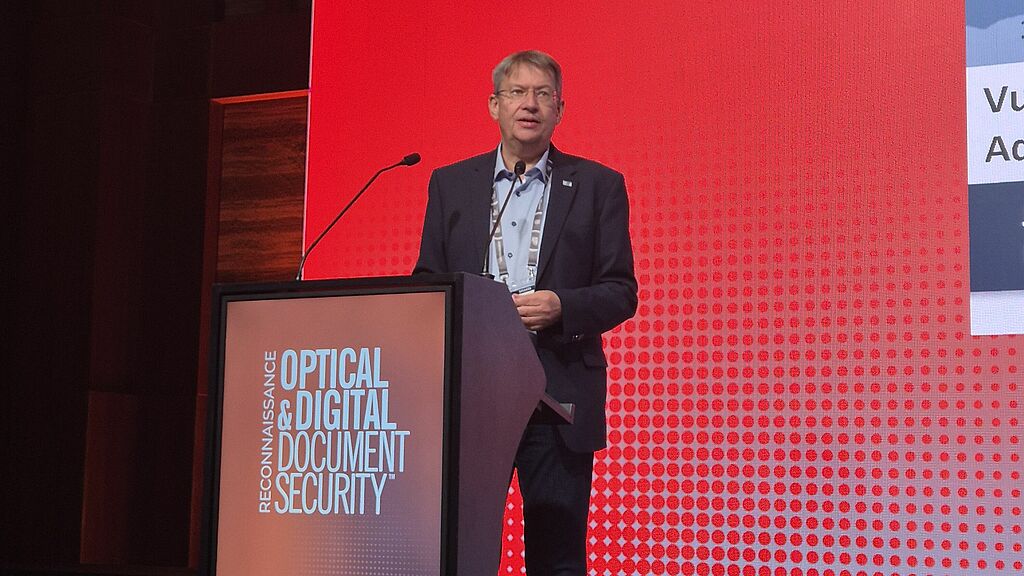
Optical & Digital Document Security (ODDS) is a specialist conference focussing on physical, digital and virtual document security. This year's conference took place from 15 to 17 September in Warsaw, Poland. Participants from the fields of digital transactions, identity and authentication as well as those responsible for designing, producing and issuing secure documents used the conference as a beneficial forum for exchanging ideas, learning and networking. inIT also actively contributed to the current research discussion with the Discrete Systems research group headed by Prof. Dr. Volker Lohweg.
Lecture on AI’s vulnerability in document verification
Artificial Intelligence (AI) is increasingly being applied in the verification of security documents such as banknotes, ID cards and passports. Although forgeries are often reliably recognised, there is a risk of targeted manipulation that may deceive the models. In his highly acclaimed presentation at the ODDS, Prof. Dr. Volker Lohweg showed how forged documents can be falsely classified as genuine by AI. Currently, such attacks are mainly carried out digitally, but the transfer to the real, physical world, for example on banknotes and ID cards, is currently being researched. If this transfer succeeds, the verification possibilities of security documents would be severely jeopardised. This was emphasised at the conference in order to highlight the urgency of more robust verification methods to the security experts present.
"The results shown on the vulnerability of AI-supported verification systems surprised many of those present and made it clear how great the future challenges are," emphasised Julian Bültemeier, research associate in the Discrete Systems research group.
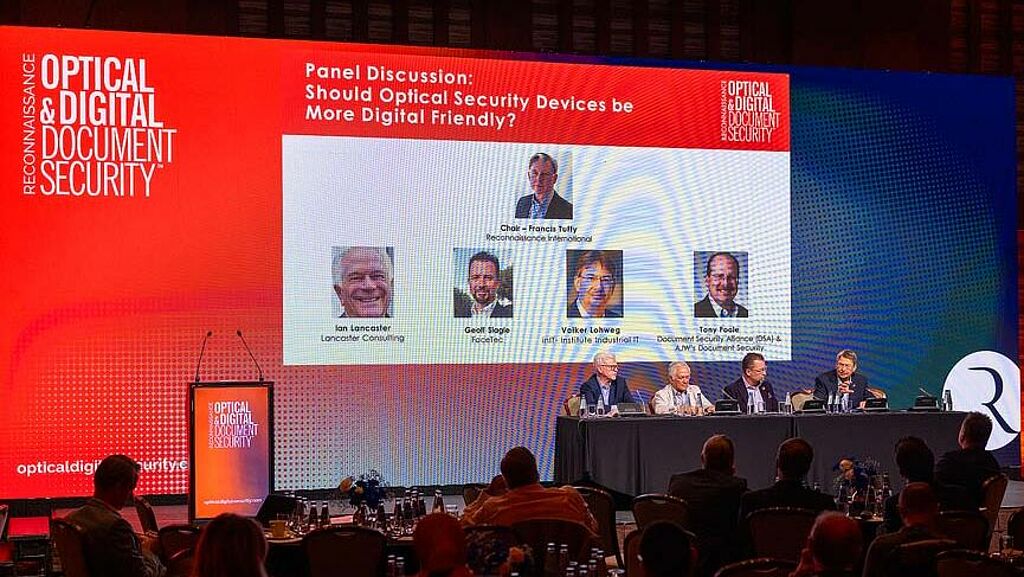
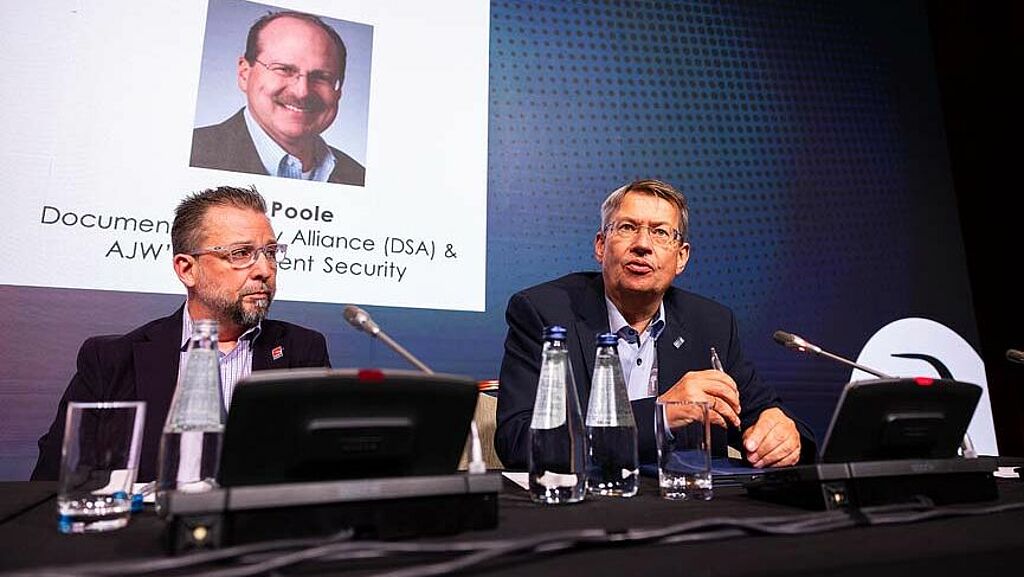
Participation in panel discussion
The conference discussed not only the vulnerability of AI systems in document verification, but also the question of whether optical security features such as holograms or other optically variable devices (OVDs) should be made more "digital-friendly" in the future. In addition to inIT Professor Volker Lohweg, internationally renowned experts such as Francis Duffy (Reconnaissance International, UK), Ian Lancaster (Lancaster Consulting, UK), Tony Poole (Document Security Alliance, USA) and Geoff Slagle (FaceTec, USA) also took part in the lively panel discussion.
Opinions were very diverse: on the one hand, the opportunity was seen to significantly simplify verification - for example, by allowing security features to be checked using reading systems (special systems, smartphones, etc.); on the other hand, it was emphasised that laypeople would not carry out such checks anyway and that experts would be able to do so even without digital aids. The audience and panellists agreed that training the population is essential. It was also critically emphasised that digital solutions depend on a stable energy supply. As the recent power outage in Spain showed, banknotes or ID cards can no longer be checked digitally in such situations. In addition, the necessary technology, such as modern smartphones or stable internet connections, is not available everywhere.
Prof. Lohweg comments: "The balance between user-friendliness for the population, IT security and practical applicability remains one of the central challenges of document security in the future."