

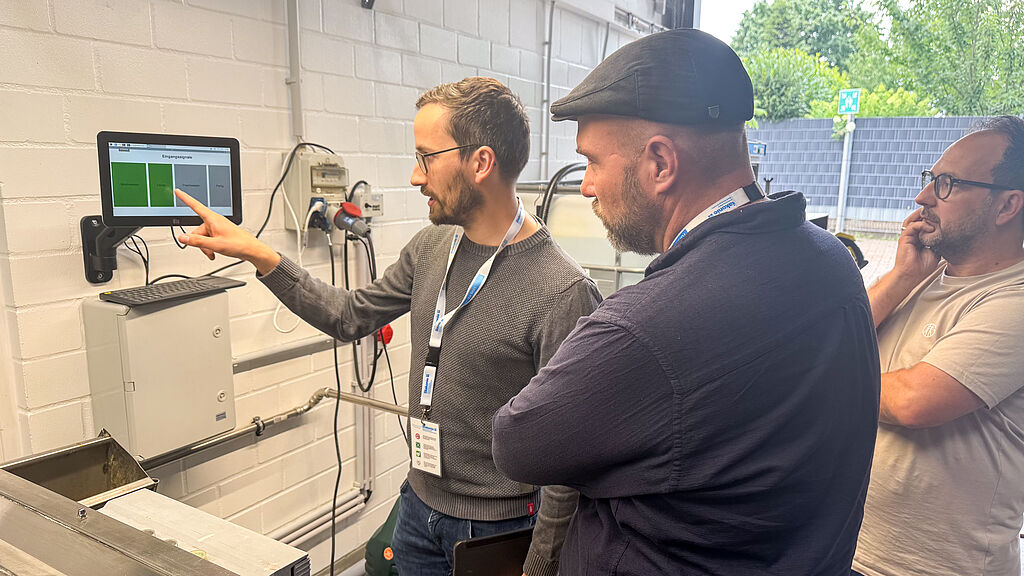
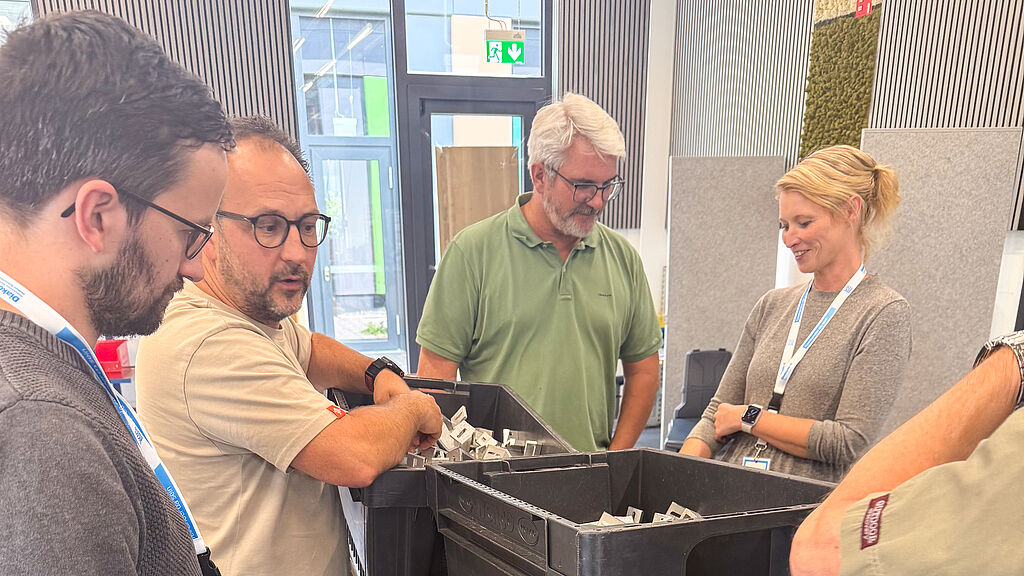
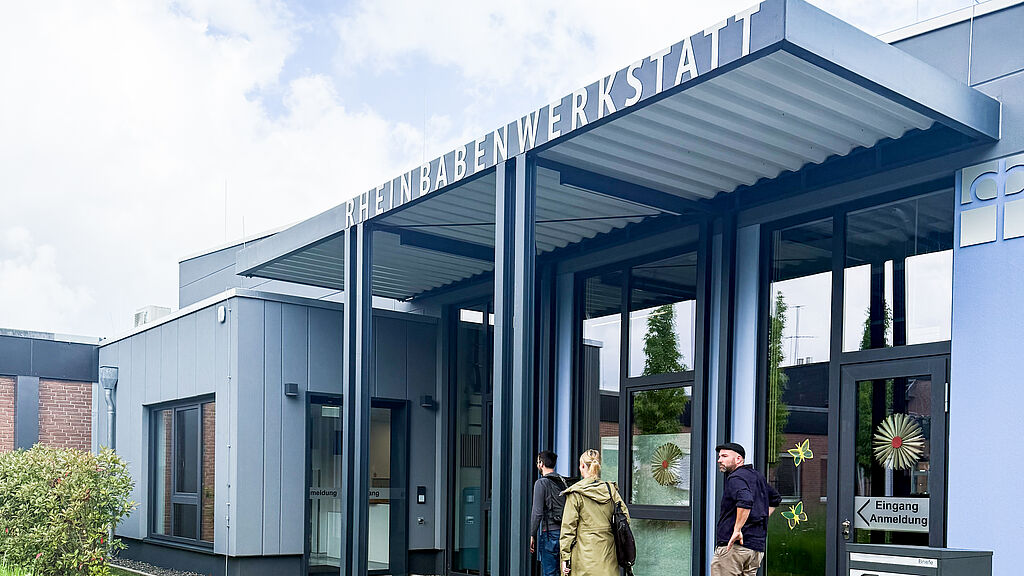
At the project meeting on 7 July 2025 at the Rheinbarbenwerkstatt Bottrop – a workshop for people with disabilities (WfbM) – the AMICO project team discussed the initial results of a scientific survey, addressed practical challenges of existing systems. They also used the demonstrator to show how customisation and user-friendliness could be implemented more effectively. The goal is to create a flexible assistance system that offers genuine support: one that is tailor-made, intuitive and human-centred.
The status quo: positive signals and a clear challenge
Following a comprehensive update on current use cases and experiences to date, one key finding emerged: the initial results of a scientific survey show that digital assistance systems are generally viewed positively. At the same time, however, it is clear that their design must be highly individualised.
Research associates Mario Heinz-Jakobs and Alexander Kuhn, from the Human-Technology Interaction research group led by Prof. Dr. mult. Carsten Röcker, are assisting with the scientific evaluation. The detailed results will be published separately in the coming weeks. ‘It is clear that the use of digital assistance systems in various inclusion areas has fundamentally positive effects,’ summarises Mario Heinz-Jakobs. ‘However, when evaluating individual interactions and functions, it becomes clear that a high degree of flexibility is required.’
The limitations of existing systems: more than just black and white
The need for individual and adaptable solutions was also underpinned by the participants' practical reports. Many existing systems reach their limits in everyday working life.
‘We have gained experience with various assistance systems so far – and all of them encountered similar problems,’ reports Arnd Schreiner (Bottroper Werkstätten). ‘Individual adjustments are usually only possible through complex changes and are hardly feasible in everyday life.’
His colleague Michael Kahnert sums it up: ‘We remain stuck in a black-and-white view – but what about the shades of grey?’
The AMICO approach: individuality meets ease of use
This is where AMICO comes in: the aim is to create a system that offers maximum customisation while remaining intuitive to use. The demonstrator presented allows users to set numerous parameters themselves – tailored to their individual needs.
The technical development is based on the methodology of internal differentiation, in which qualifications, needs and work requirements are systematically taken into account. This consistently puts people at the centre – as the benchmark for technological solutions.
More on this:BAG WfbM - Internal differentiation
Insights into practice and mutual exchange
Another highlight of the meeting was a tour of the Rheinbarben workshop, which was combined with an open discussion about technological and organisational challenges. Participants found it particularly valuable to be able to look beyond their own horizons.
'It's great to be able to discuss with other colleagues in the project network how we can meet these challenges,' said Anja Große-Coosmann from Wertkreis Gütersloh. Her colleague Fabian Zodrow added, 'We all face similar challenges in relation to the needs-based design of qualifications and processes. That's what makes the exchange so valuable.'
Outlook: On the path to value creation
Over the next few weeks, the focus will be on further developing the demonstrator and consolidating the approaches taken thus far, while continuing to use an iterative, human-centred approach.
'It will be very exciting to see how AMICO can be used directly in value-adding processes and deliver added value in the interaction between manufacturing companies and workshops as service providers,' says Mario Heinz-Jakobs, looking forward to the next phase of the project.